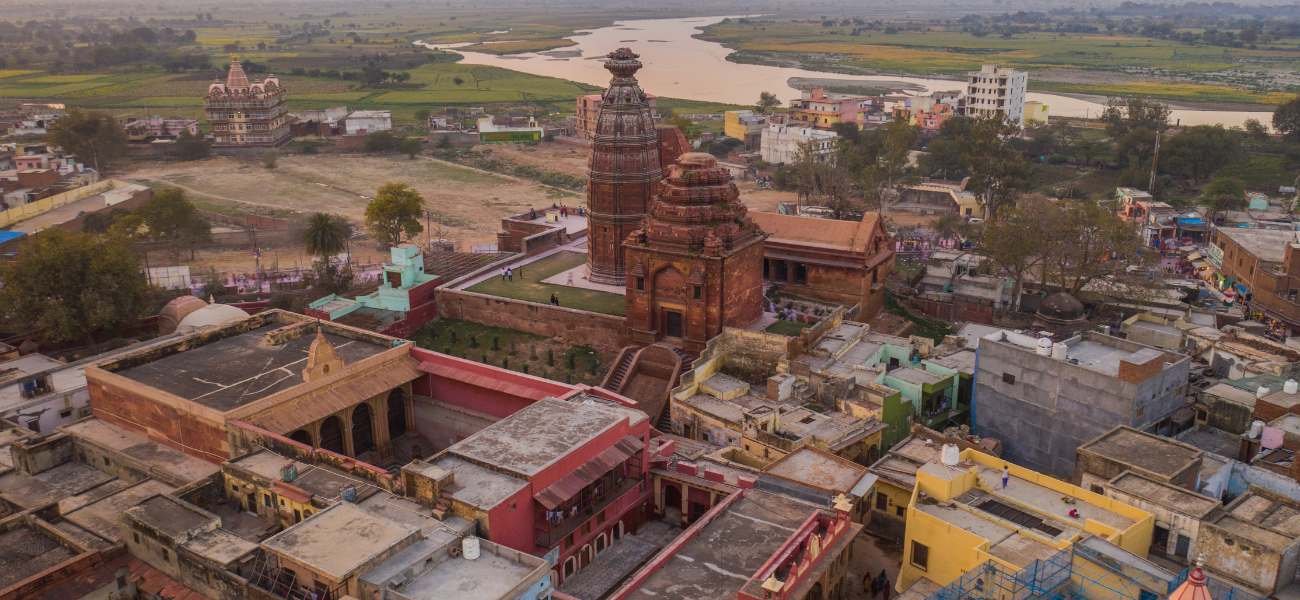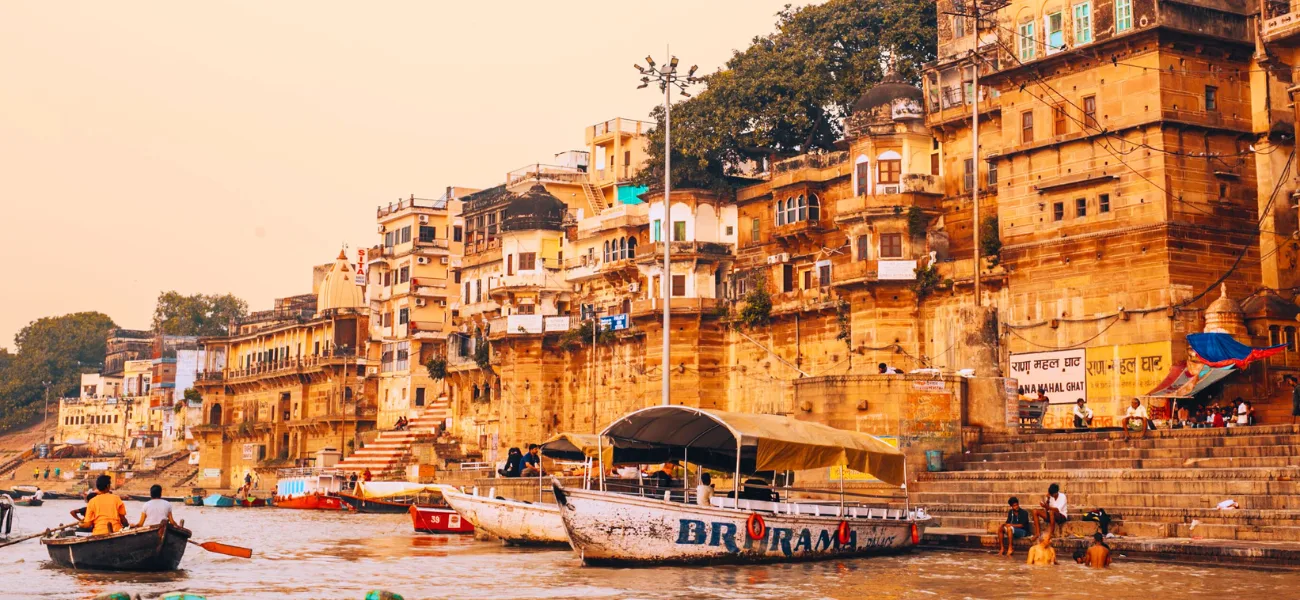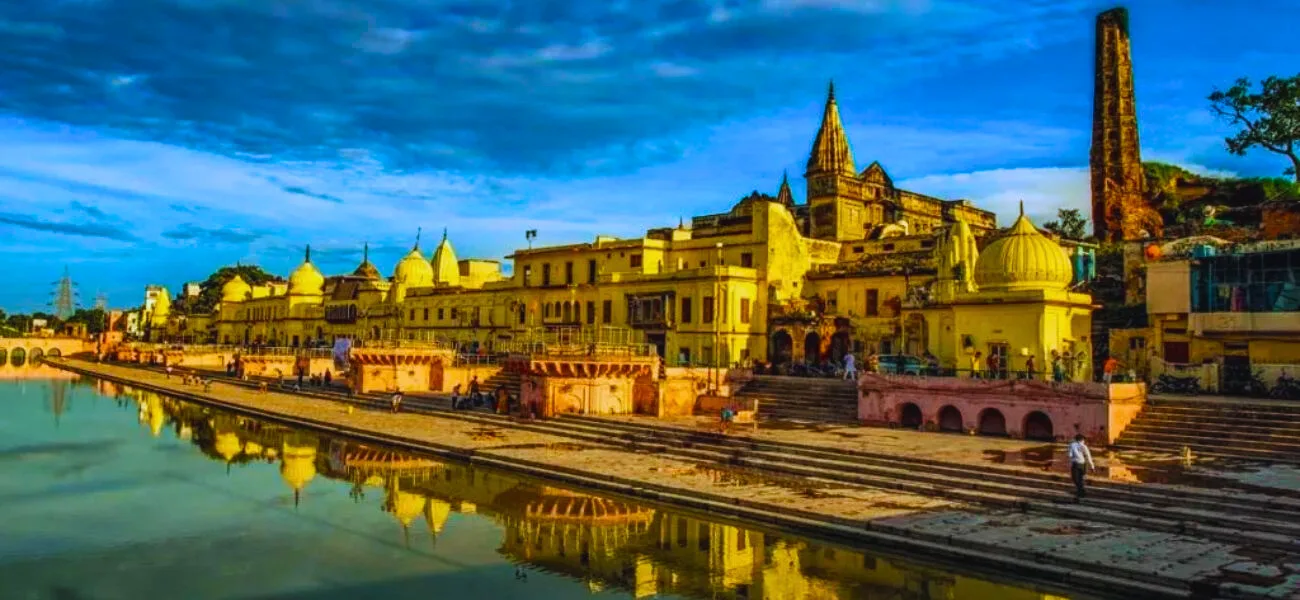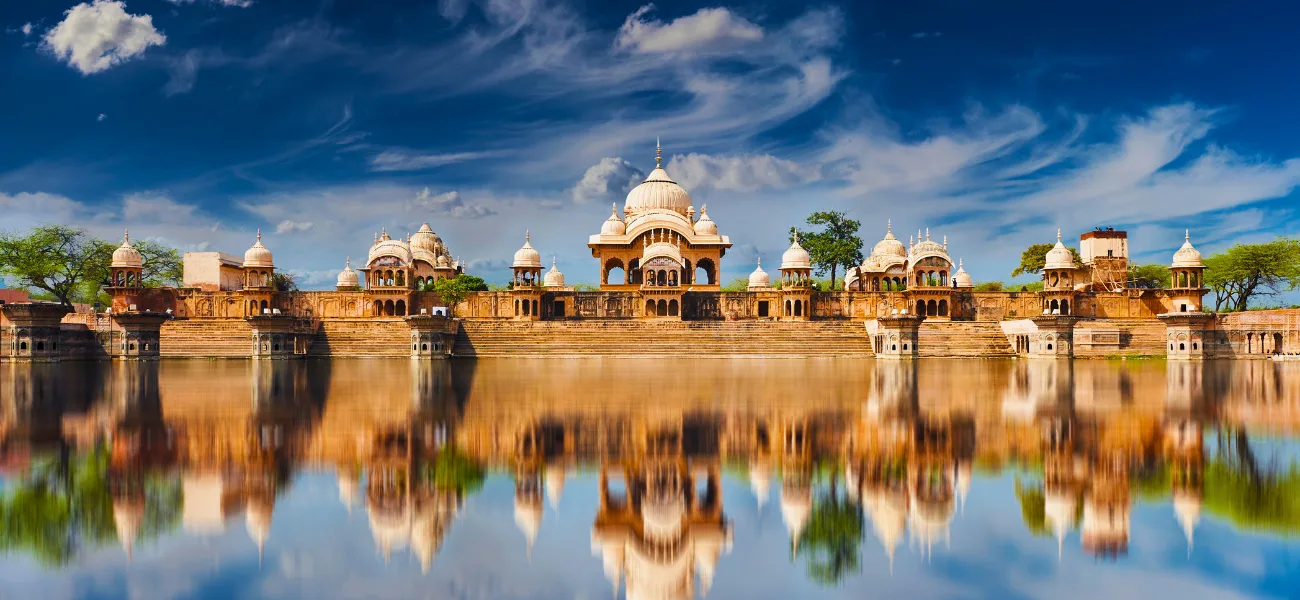




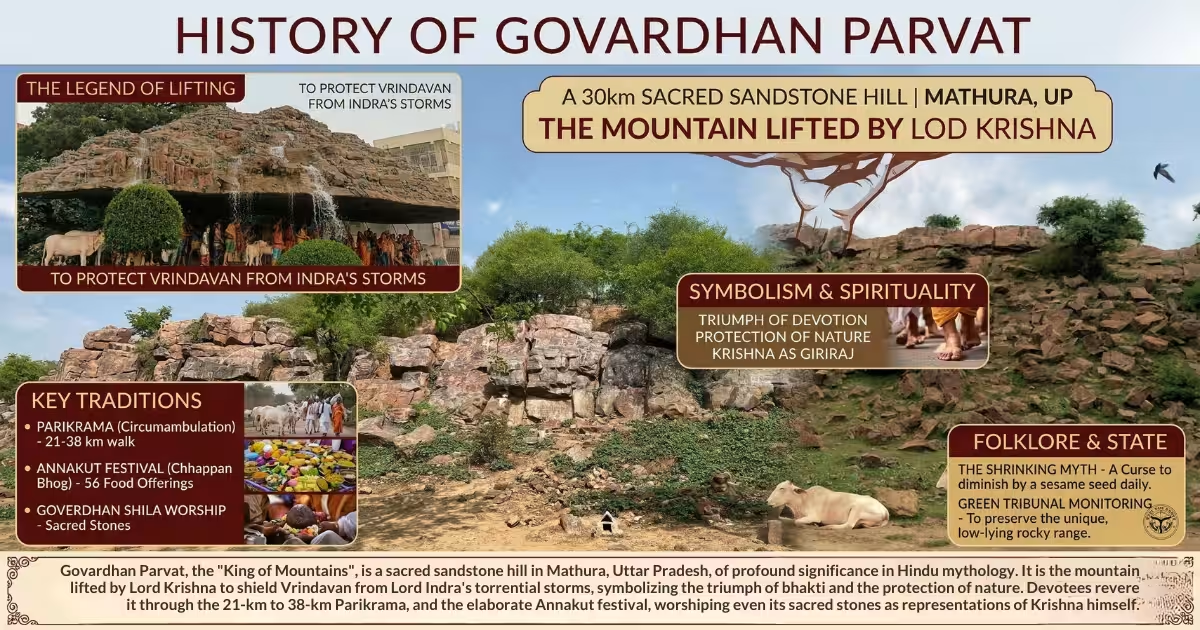
There are places you visit, and then there are places that quietly stay with you. Govardhan Parvat is one of those. You don’t notice it all at once. It doesn’t rise sharply like other hills. It stretches low, almost like it has chosen to remain close to the earth. And yet, every stone here carries a story people have been repeating for centuries.
Ask anyone walking the parikrama path, and they won’t talk about height or size. They will tell you about faith. About a mountain that was once lifted on a little finger. About protection. About a silence that feels older than memory itself.
Table of Contents
ToggleGovardhan Parvat: A Sacred Hill in Mathura
Govardhan Parvat is a long stretch of sandstone hill located in the Mathura district of Uttar Pradesh. It runs quietly across the land, not very tall, but spread out over several kilometers. Locally, people call it Giriraj, the king of mountains.
- Location: Govardhan town, Mathura, Uttar Pradesh
- Length: Around 8 km (traditionally believed to be much longer earlier)
- Nature: Low rocky hill, part of the Braj region
- Spiritual identity: Considered a direct form of Lord Krishna
At first glance, it may look like just another hill. But spend a little time here, and you start noticing something else. People don’t just see it. They greet it. They bow to it. Some even pick up small stones and carry them like something living.
The Story That Defines the History of Govardhan Parvat
The History of Govardhan Parvat is deeply tied to one story. A story that almost everyone in India has heard in some form.
The people of Vrindavan once prepared to worship Lord Indra, the god of rain. It was a yearly ritual. Something that had always been done. But Krishna, still a child then, questioned it.
He asked them a simple thing. Why worship a distant god when the hill before them gave them everything? Grass for cattle. Shelter. Water. Life.
So the villagers turned towards Govardhan instead.
Indra did not like this. The skies darkened. The rain did not fall gently. It came down in anger. Torrential, endless, almost as if the land would be washed away.
And then something quiet, and yet impossible, happened.
Krishna lifted Govardhan Parvat on his little finger.
Not for a moment. Not for an hour. For seven days.
The villagers, their cattle, everything they had, gathered beneath it. Safe. Dry. Waiting. Watching.
And when the rains stopped, the story stayed.
What This Story Really Means
This part is often told softly, almost like an afterthought. But it carries weight.
The History of Govardhan Parvat is not only about a miracle. It is about a shift.
- From ritual to devotion
- From fear to trust
- From distant gods to the nature around you
Krishna did not destroy Indra. He did not fight him. He simply showed that protection and care already existed, right there, in the land itself.
That is why even today, people don’t just worship Krishna here. They worship the hill.
Mythological Origins of Govardhan Parvat
There is another belief that quietly moves through the region.
It is said that Govardhan Parvat did not originate on earth. The Puranas mention that it descended from Goloka, the spiritual abode of Krishna.
That is why many devotees do not see it as just a part of geography. For them, it is something that belongs to another realm, resting here for a while.
You will notice this in small things.
People touch the ground before stepping forward.
They pick up stones with care.
They speak less.
The Shrinking Hill: A Story Still Told
There is also a story that older people still repeat.
Once, Govardhan Parvat was said to be massive. Towering. Almost impossible to measure. But due to a curse by sage Pulastya, it began to shrink.
Not suddenly. Not dramatically.
A little at a time.
As small as a sesame seed each day.
And that is why today, the hill appears low. Almost modest.
Whether one believes this or not is a different matter. But when you walk around it, the idea stays with you.
Something ancient, slowly becoming quieter.
Govardhan Parvat Today: Geography and Reality
Today, Govardhan Parvat stands as a major pilgrimage site in Uttar Pradesh.
It is not untouched. It has changed over time. Parts of it have eroded. Human activity has also played its role. That is why the Green Tribunal of India now monitors the area to prevent further damage.
Still, the essence remains.
- A continuous path around the hill for pilgrims
- Small temples, shrines, and resting points
- Villages growing quietly around it
- A steady flow of visitors throughout the year
And if you walk early in the morning, before the crowd builds, you can still feel what people must have felt long ago. A certain stillness. A sense of being watched, not by something above, but by something around.
Govardhan Parikrama: Walking Around Faith
One of the most important traditions connected to the History of Govardhan Parvat is the parikrama.
People walk around the hill. Slowly. Patiently.
- Distance: Around 21 km (sometimes extended to 38 km depending on the route)
- Time: 5 to 8 hours for a simple walk
- Method: Walking barefoot, sometimes even performing dandavat parikrama
Dandavat parikrama is not easy to watch. Or to understand at first.
A devotee lies flat on the ground. Marks the spot. Get up. Steps forward. Lies down again.
And continues like this for the entire journey.
There is no rush here. No urgency. Just repetition. Breath. Effort.
Annakut Festival: When the Hill is Fed
After Diwali, the region changes slightly. There is more movement. More preparation.
Annakut is celebrated here with great devotion.
- 56 varieties of food (Chhappan Bhog) are prepared
- The food is offered to Govardhan Parvat
- Temples create small symbolic mountains of food
This comes from the same story.
After Krishna lifted the hill, the villagers prepared a feast in gratitude. That moment continues every year.
Govardhan Shila: A Small Stone, A Living Presence
Many people take home small stones from Govardhan. These are called Govardhan Shila.
To an outsider, it may look like a simple rock.
But for devotees, it represents Krishna himself.
They keep it in their homes. Offer water, flowers, food. Treat it not as an object, but as a presence.
And once you have seen how gently people hold these stones, it becomes difficult to call them ordinary.
A Quiet Travel Experience with Mathura Vrindavan Tourism
If you are planning to understand the History of Govardhan Parvat, it helps to not rush it.
Places like this are not about ticking off a list. They reveal themselves slowly. Through walking, waiting, and observing.
With Vrindavan Mathura Tour Package, the journey is usually kept simple and grounded. Not crowded with too many stops. Just enough time to walk the parikrama path, visit the important spots, and sit quietly when needed.
Sometimes, the best part of the visit is not the temple. It is the road between two points.
Contact: Vrindavan Mathura Tour Package Today:
Call Us: +91 7300620809
WhatsApp Us: +91 7300620809
Visit Our Website: Vrindavan Mathura Tour Package
Best Time to Visit Govardhan Parvat
- October to March: Pleasant weather, comfortable for parikrama
- During Annakut: Festive atmosphere, but crowded
- Early morning visits: Quieter, more peaceful
Avoid peak afternoon hours in summer. The path gets hot, and the walk becomes difficult.
How to Reach Govardhan Parvat
- By Road: Around 25 km from Mathura, well connected by local taxis and buses
- By Train: Nearest railway station is Mathura Junction
- By Air: Nearest airport is Agra or Delhi
From Mathura, the journey is short. But it feels longer in a good way.
Conclusion
The History of Govardhan Parvat does not sit in books alone. It moves quietly through footsteps, rituals, and stories that people continue to carry.
You walk around it once, and it feels like a path.
You walk again, and it begins to feel like something else.
Not very tall. Not very loud.
And yet, it stays.