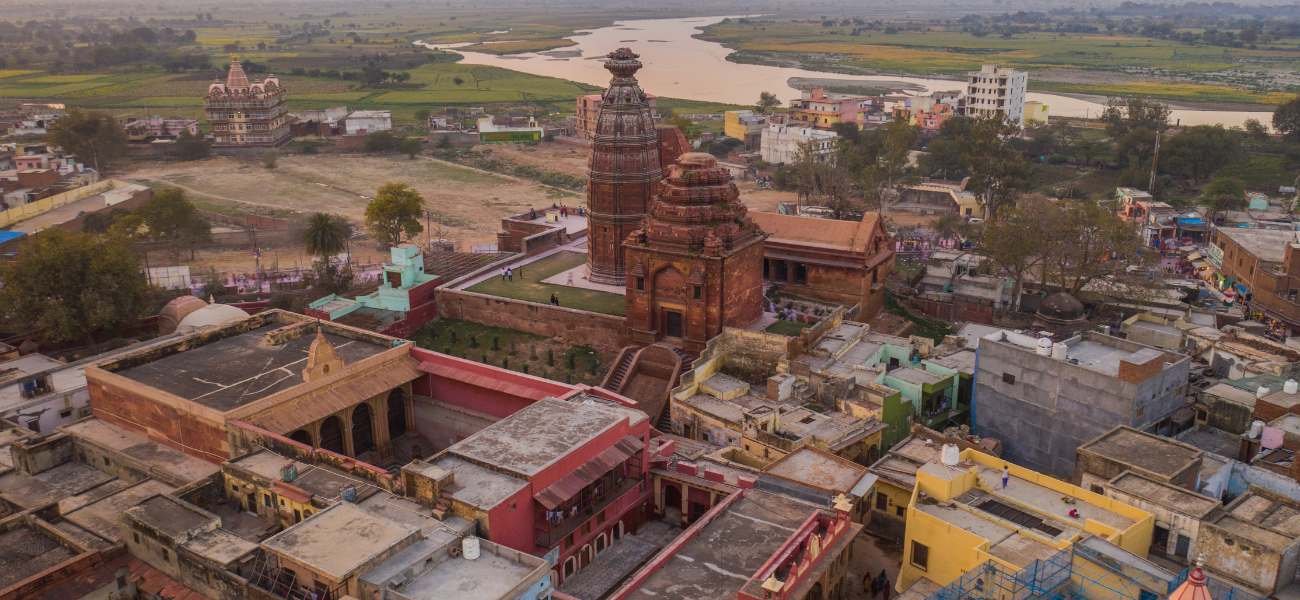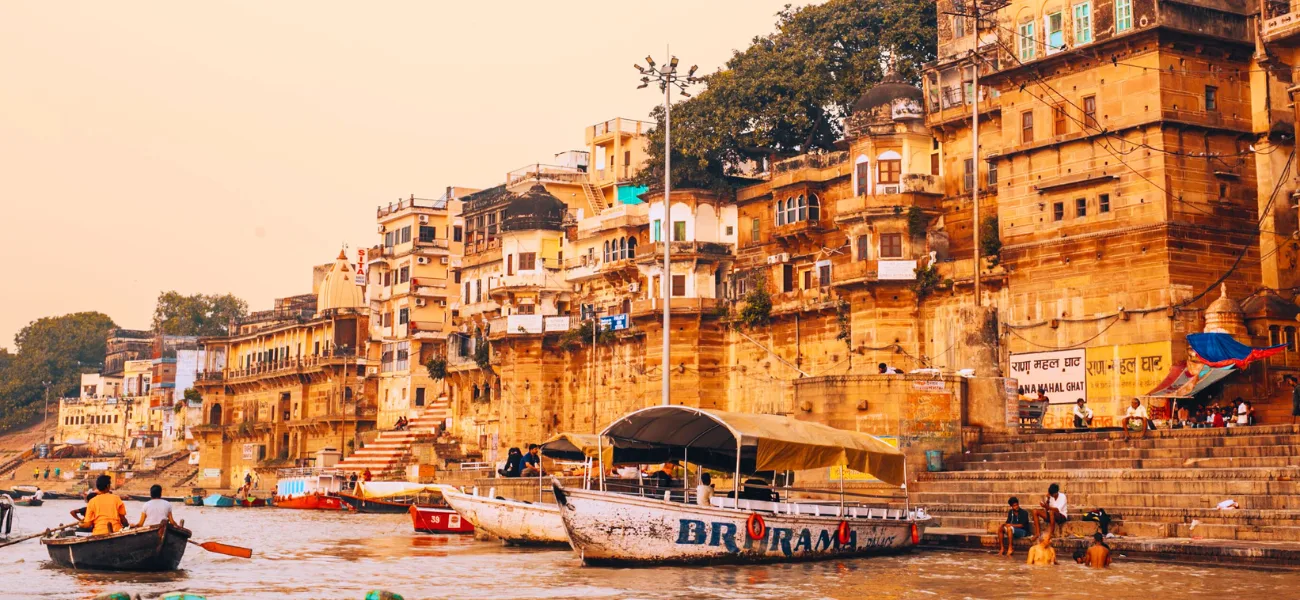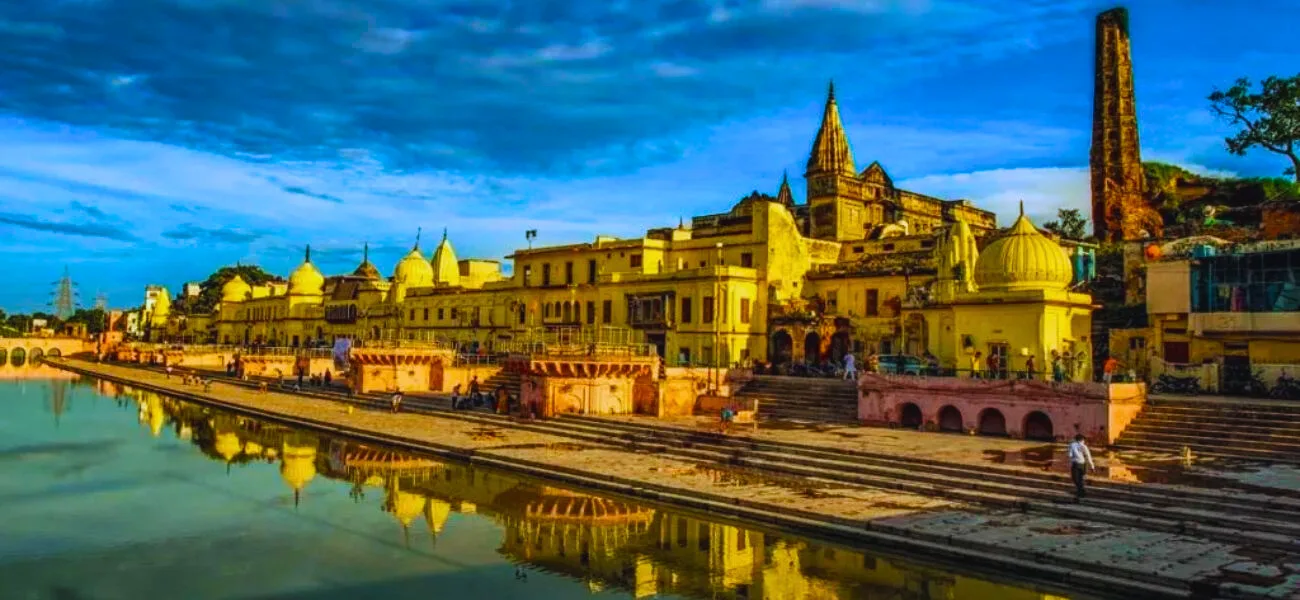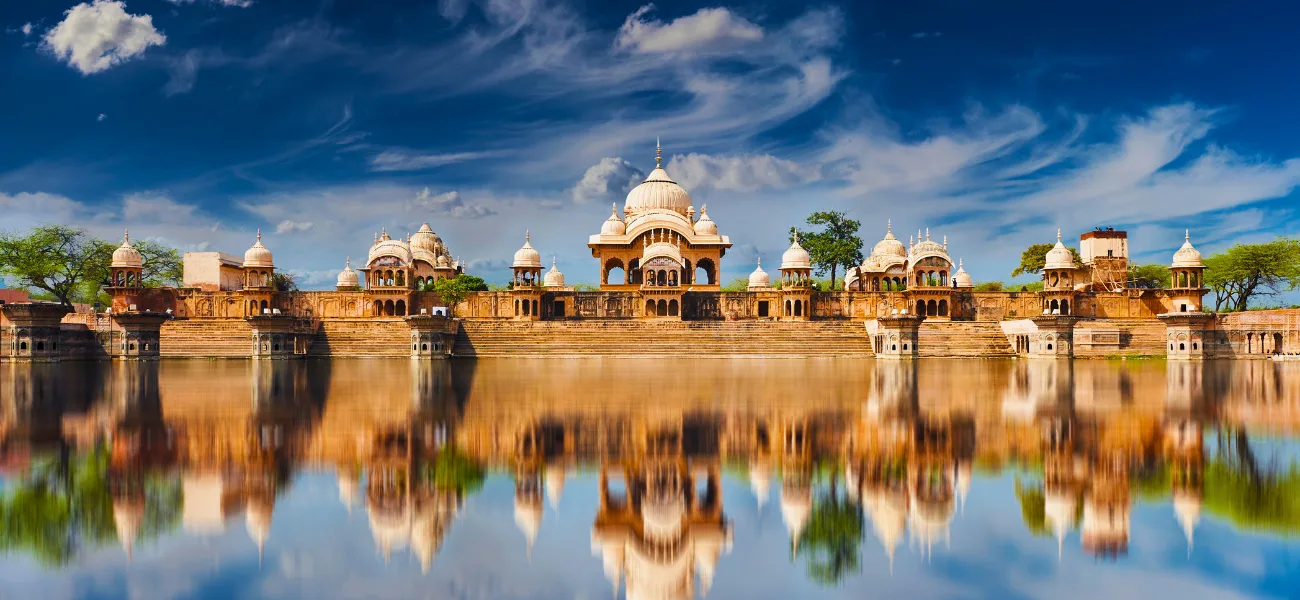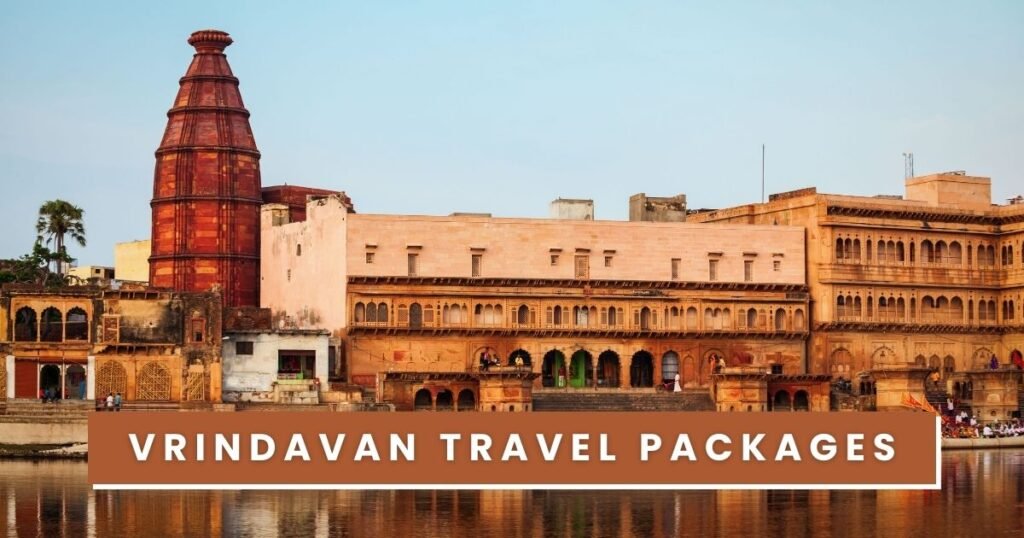



A lot of people think Vrindavan is only about temples.
They’re not wrong. But they’re not fully right either.
After darshan, when the bells fade and your feet start to ache a little, something else quietly takes over. The smell of warm milk. Sugar. Ghee. Cardamom. You step out of a temple lane, and suddenly you’re standing in front of a small sweet shop that looks like it has existed forever.
That moment—right there—is when Famous Vrindavan Sweets stop being food and start becoming part of the experience.
I’ve noticed something over the years. People remember the darshan. But they talk about the sweets. Sometimes weeks later.
About Vrindavan Before We Talk About Sweets
Vrindavan isn’t a tourist town. It’s a living devotional space.
People chant while walking. Cows block roads without apology. Temple timings shift slightly. Lanes feel confusing until they don’t. And everything—absolutely everything—moves at its own pace.
This matters, because Traditional sweets of Vrindavan are shaped by this rhythm. They’re not made for speed. They’re made for offering, sharing, and slowing down.
That’s why you don’t grab a sweet and rush. You stand. You wait. Sometimes you talk to the shopkeeper. Sometimes you just watch.
Why Sweets Feel Different After Darshan
Here’s the thing most people don’t notice.
After darshan, your senses are already open. You’re quieter inside. Less hurried. That’s when taste hits differently. A peda feels richer. A laddu feels softer. Even a simple milk-based sweet carries weight.
That’s why Must-try sweets in Vrindavan are best eaten after temple visits, not before. Your body is tired, but your mind is calm. It’s a perfect combination.
Famous Vrindavan Sweets You Should Not Miss
I’ll be honest. There are many. But a few stand out—not because they’re flashy, but because they’ve stayed unchanged for decades.
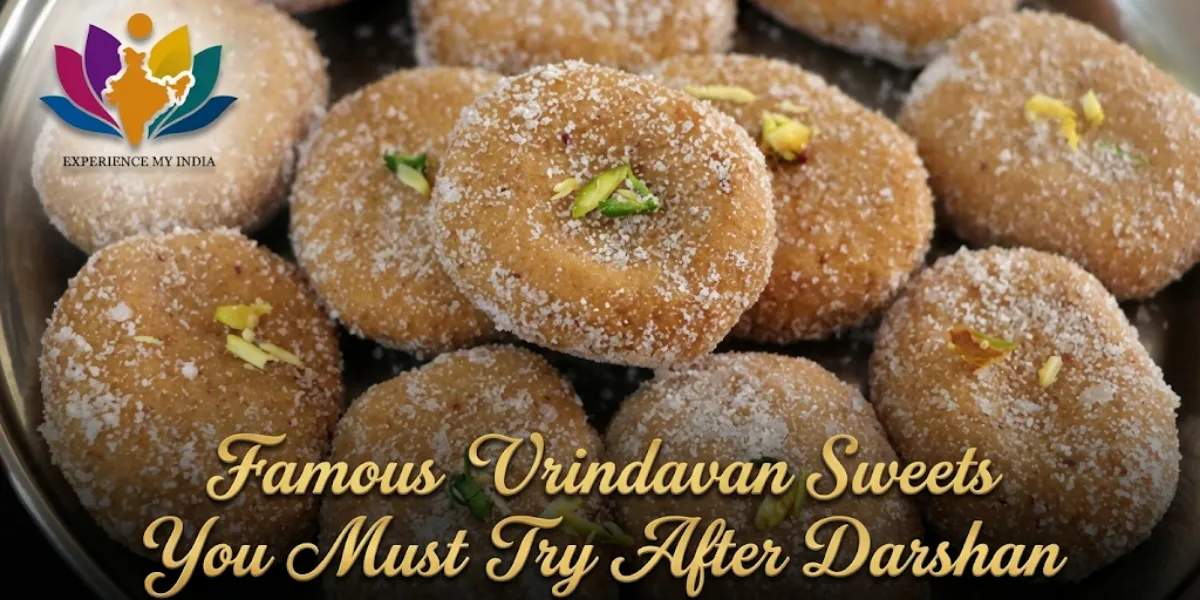
Vrindavan Peda
This one comes up first for a reason.
Made from slow-cooked khoya, lightly sweetened, and gently flavored with cardamom, Vrindavan peda doesn’t try to impress. It just sits there. Solid. Honest.
I’ve noticed most people take a bite, pause, and then nod slightly. Like they expected something sweet—but not this balanced.
This is one of the Famous Vrindavan Sweets people pack for home, usually regretting they didn’t buy more.
Khurchan
Khurchan isn’t pretty.
But it’s unforgettable.
It’s made from thickened milk scraped from large iron pans, layered with sugar and texture. Slightly chewy. Slightly crisp. Completely addictive.
Among Popular desserts in Vrindavan, this one feels the most rustic. Almost accidental. And that’s why it works.
Rabri
In Vrindavan, rabri isn’t dessert. It’s patience.
Milk is simmered for hours, layers forming slowly. Served chilled or slightly warm depending on the season. Sweet, but not sharp.
After darshan, rabri feels like rest in edible form. No rush. No drama.
Malpua
Soft inside. Crisp edges. Fried gently in ghee and soaked lightly in syrup.
Malpua here feels celebratory without being heavy. Often offered during festivals, but available year-round if you know where to look.
It’s one of those Must-try sweets in Vrindavan that people don’t plan for—but remember clearly.
Mishri Makhan
This one is simple. And symbolic.
Fresh white butter served with crystalline sugar. It’s believed to be Krishna’s favorite.
Taste-wise? Mild. Comforting. Clean.
Experience-wise? Deeply connected to Vrindavan’s identity.
Best Temples to Visit Before Your Sweet Trail
Let’s talk darshan properly, because timing matters.
Banke Bihari Temple
This temple runs on emotion, not schedule.
Darshan timings:
Morning: 7:45 AM – 12:00 PM
Evening: 5:30 PM – 9:30 PM
There is no Mangla Aarti here. Curtains open and close frequently. After darshan, most people instinctively look for sweets nearby. There’s a reason.
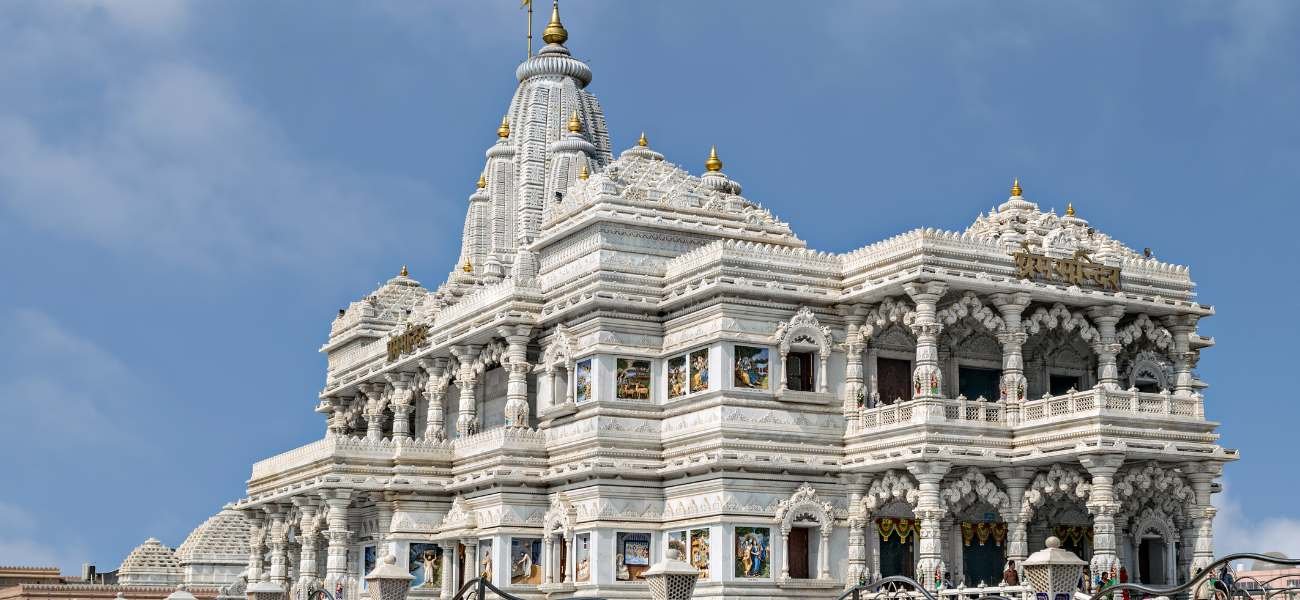
Prem Mandir
Structured. Spacious. Calm.
Darshan timings:
Morning: 8:30 AM – 12:00 PM
Evening: 4:30 PM – 8:30 PM
Evenings here naturally lead into dessert time. The area around Prem Mandir has several sweet shops that see steady post-aarti crowds.
ISKCON Temple Vrindavan
Organized and peaceful.
Aarti timings:
Mangla Aarti: 4:30 AM
Guru Puja: 7:30 AM
Sandhya Aarti: 6:30 PM
Many visitors plan sweets after evening aarti here. It feels like a reward after discipline.
Radha Raman Temple
Quiet. Traditional. Less crowded.
Darshan timings:
Morning: 8:00 AM – 12:30 PM
Evening: 6:00 PM – 8:00 PM
People don’t rush after this temple. They walk. Slowly. And then stop for something sweet.
How to Reach Vrindavan (So You’re Not Exhausted Before Sweets)
By Road (Car or Taxi)
From Delhi, Vrindavan is about 160 km via Yamuna Expressway. Smooth roads. About 3–4 hours.
Best option if you want flexibility.
By Train
Mathura Junction is the nearest major station. From there, Vrindavan is just 12 km.
Reliable, but stations can feel crowded.
By Bus
Frequent buses from Delhi and Agra. Comfort varies.
By Air
Nearest airports are Agra and Delhi. Road travel required afterward.
Best Routes to Reach Vrindavan
- Delhi → Yamuna Expressway → Mathura → Vrindavan
- Agra → NH19 → Mathura → Vrindavan
Yamuna Expressway remains the smoothest and least tiring route.
Why Sweets Are Part of the Pilgrimage, Not an Extra
Here’s something I think people overlook.
In Vrindavan, sweets aren’t indulgence. They’re sharing. You buy them to offer. To distribute. To take home. And to remember.
That’s why Famous Vrindavan Sweets feel emotionally heavier than desserts elsewhere. They’re connected to darshan, gratitude, and pause.
This is also why travelers exploring Vrindavan through Vrindavan Mathura Tour Package often plan sweet stops intentionally—not as food breaks, but as part of the rhythm.
FAQs
- What are the most Famous Vrindavan Sweets?
Peda, khurchan, rabri, malpua, and mishri makhan. - When is the best time to try sweets in Vrindavan?
After temple darshan, especially in the evening. - Are sweets available all year?
Yes, though varieties increase during festivals. - Are these sweets very sweet?
Most are balanced, not overly sugary. - Can sweets be taken home?
Yes, especially peda and khurchan. - Are sweets offered as prasad?
Some shops prepare sweets specifically for offerings. - Is Vrindavan suitable for senior citizens?
Yes, with proper pacing. - Which temple gets most crowded?
Banke Bihari Temple, especially on weekends. - Is it okay to eat sweets daily here?
Most people do—and walk it off naturally. - Do tour packages include food planning?
Many include guidance on local food experiences.
I think what stays with people isn’t just the sweetness on the tongue. It’s the quiet moment that comes with it—the standing outside a temple, box in hand, feeling oddly content. In Vrindavan, that moment matters as much as the darshan itself.