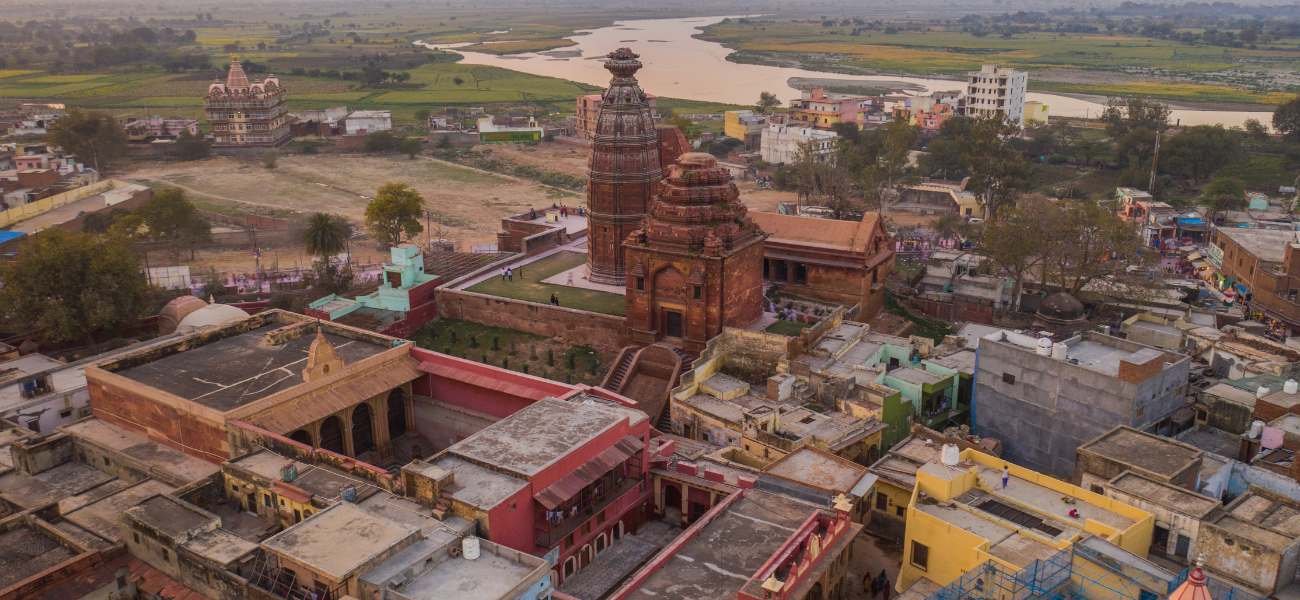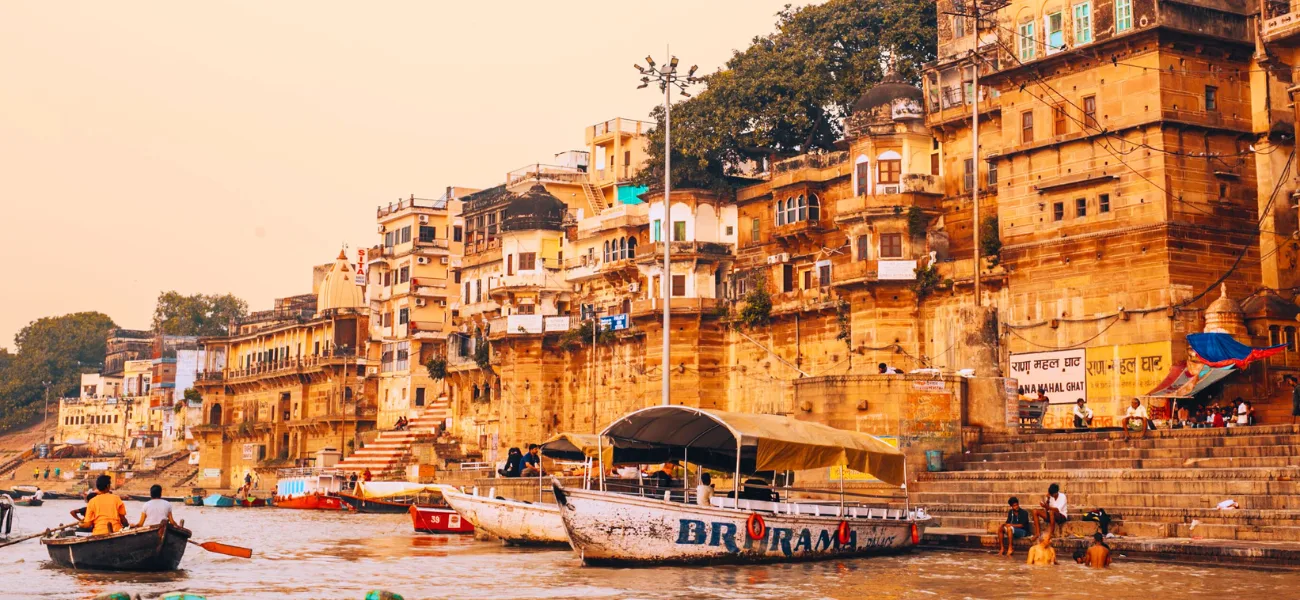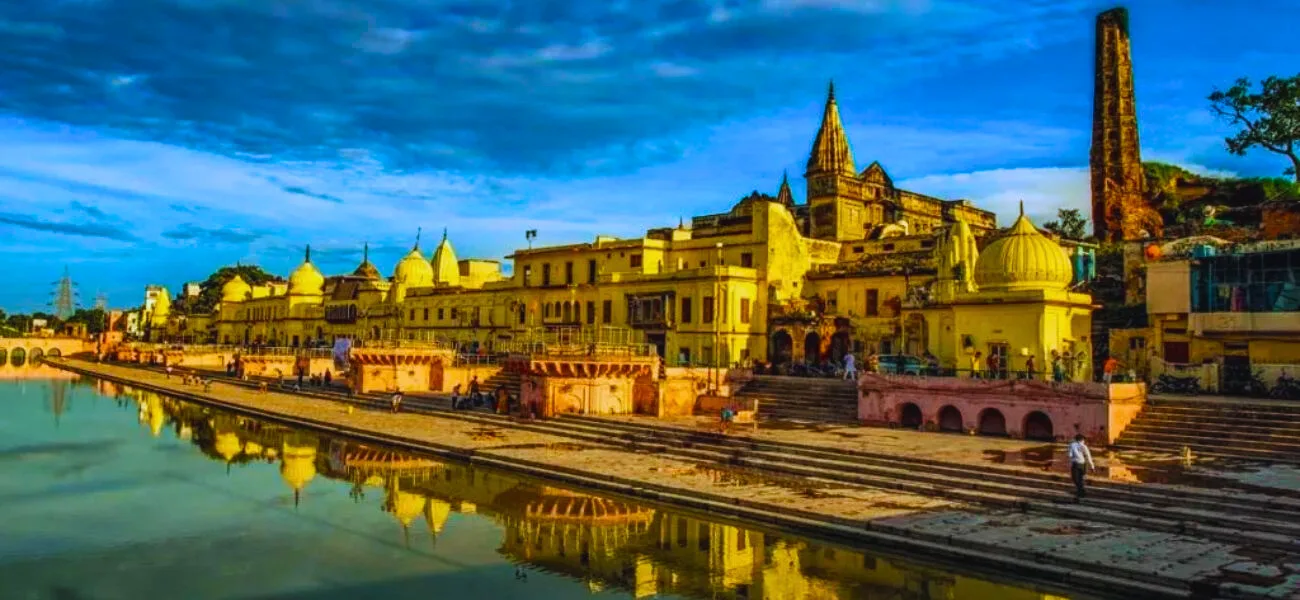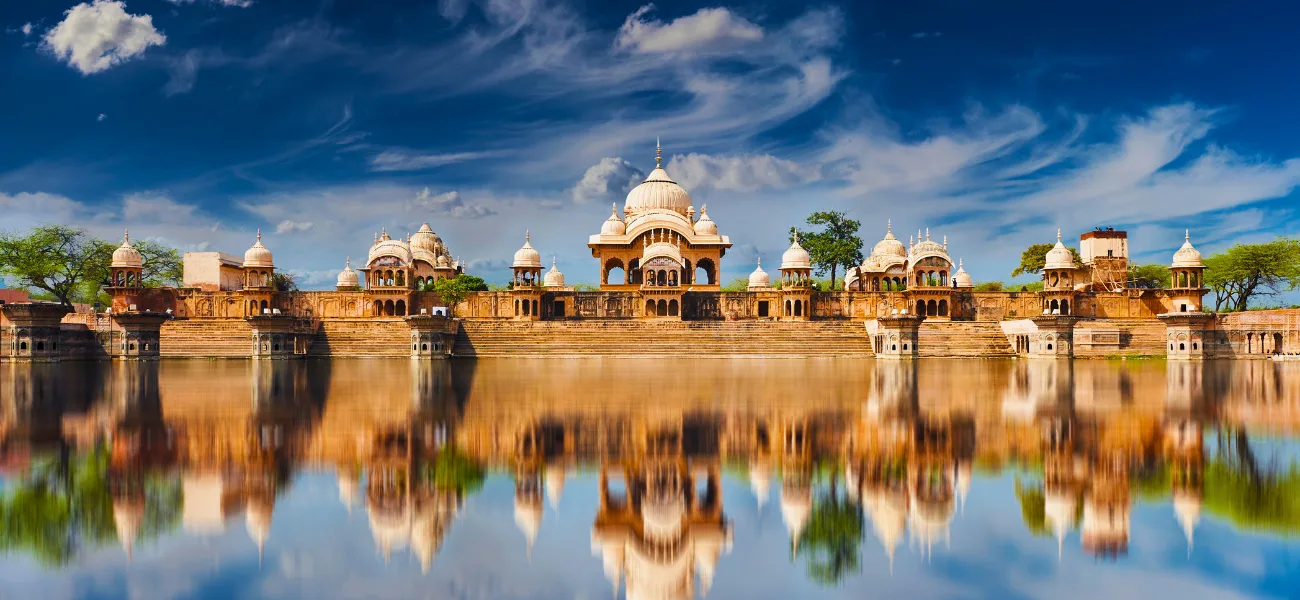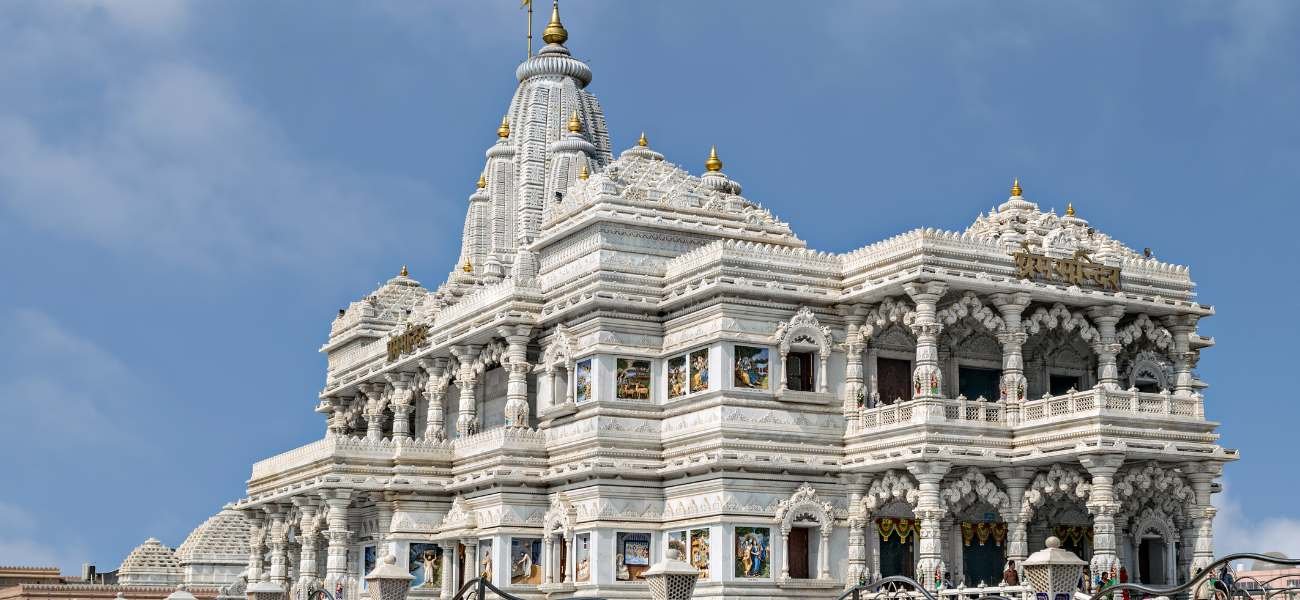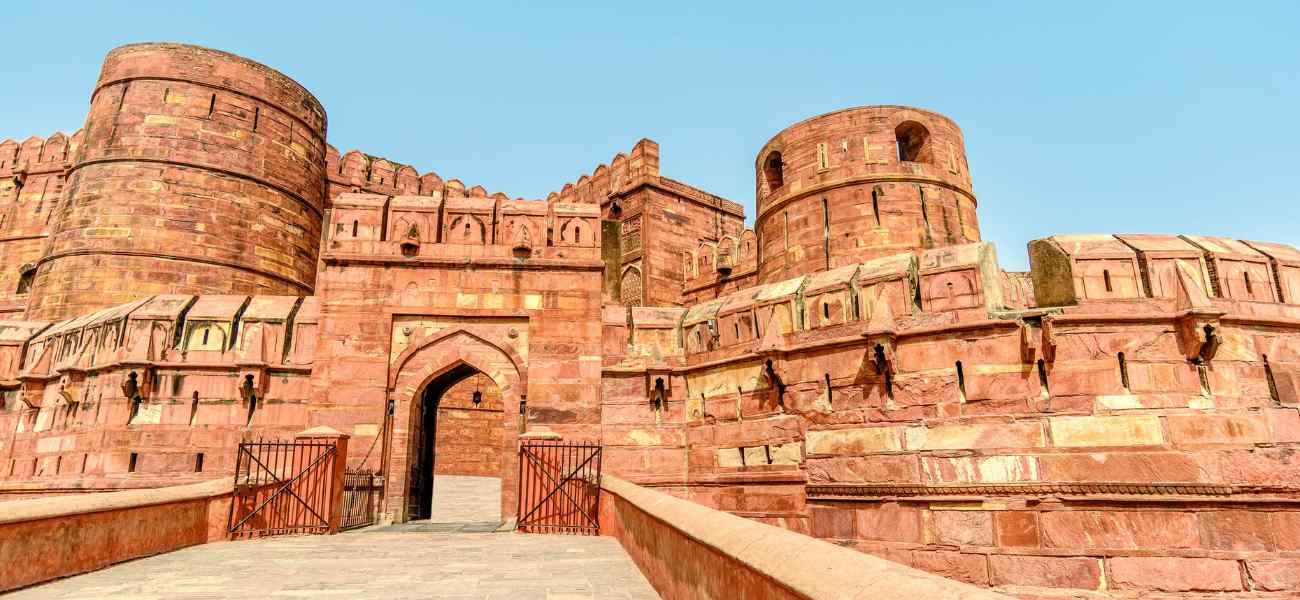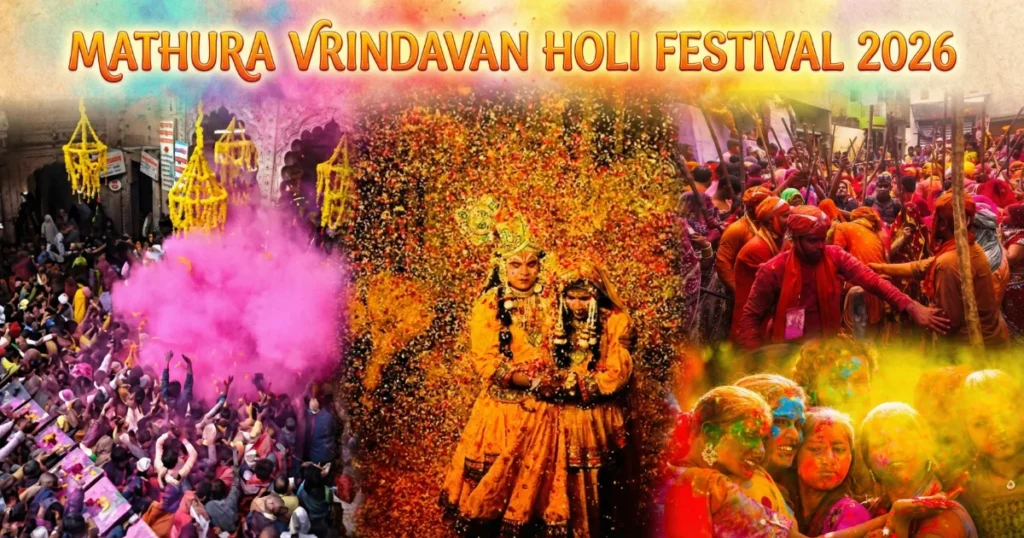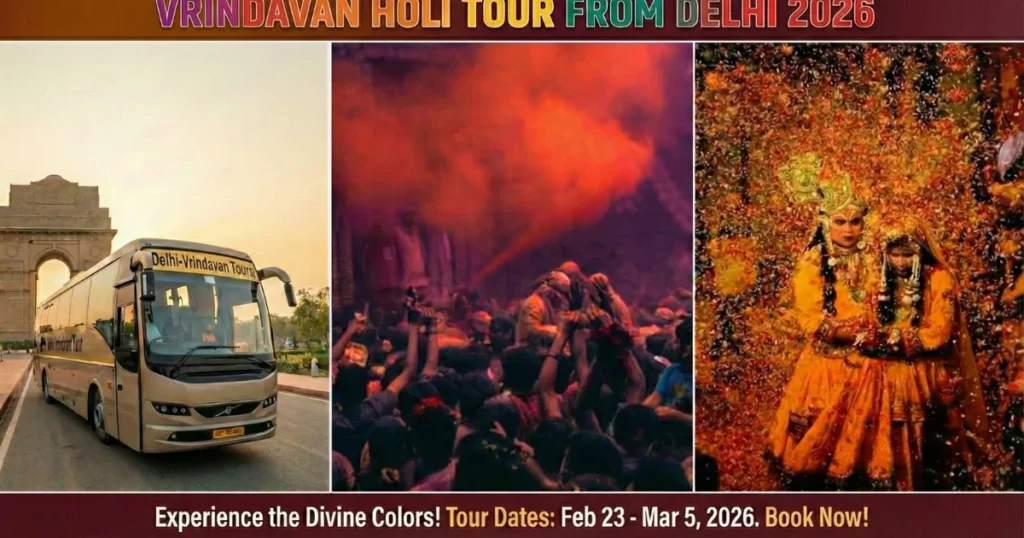
| Quick Answer– Janmashtami Festival 2026: Krishna Janmashtami 2026 falls on Friday, 4 September (ISKCON celebrates on Saturday, 5 September). The midnight Nishita Kaal puja-the exact moment of Krishna’s birth-runs from 11:26 PM to 12:11 AM on the night of 4–5 September. Mathura and Vrindavan receive around 1.5 million pilgrims during this period. Experience My India runs dedicated Janmashtami tour packages from ₹4,999 per person. Book 4–6 weeks ahead. Call +91-7302265809. |
Introduction
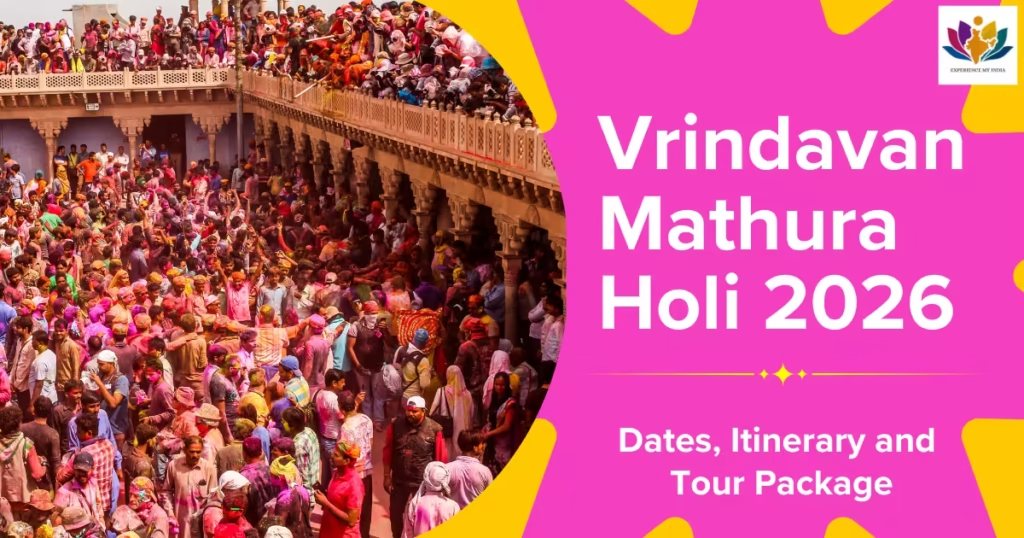
Janmashtami Festival 2026 falls on Friday, 4 September– the birth anniversary of Lord Krishna, the most widely celebrated moment in the entire Braj calendar. The date is confirmed. The midnight puja window of 11:26 PM to 12:11 AM is specific. And the crowd-approximately 1.5 million pilgrims in Mathura Vrindavan Tours across the two-day celebration-is very real.
I am Gurudutt, born and raised in Braj Bhoomi and Experience My India has guided pilgrims through Janmashtami since 2018. I know the exact moment the main gate at Krishna Janmabhoomi closes to new entrants (10 PM), which hotel zones avoid the 3 km vehicle ban and how the ISKCON and Smarta celebrations on two different days are actually best experienced together rather than as competing choices.
This guide gives you every confirmed date and timing for Janmashtami 2026, the full history and significance behind the festival, a temple-by-temple picture of how Mathura and Vrindavan celebrate and a practical plan for attending. Let’s start with the dates.
Janmashtami Festival 2026-Key Dates and Timings Confirmed
This is the most searched table for anyone planning a Janmashtami trip. All dates below are confirmed for 2026.
| Event | Date | Day | Key Detail |
| Krishna Janmashtami | 4 September 2026 | Friday | Main Smarta celebration-Krishna Janmabhoomi, Banke Bihari, Dwarkadhish |
| Midnight Janmotsav (Nishita Kaal) | 4 September 2026 night (into 5th) | Friday night | Exact puja window: 11:26 PM – 12:11 AM |
| ISKCON Janmashtami 2026 | 5 September 2026 | Saturday | Vaishnava Sampradaya-Ashtami + Rohini overlap at sunrise |
| Nandotsav Celebration | 5 September 2026 | Saturday | Marks Nanda Maharaj’s joy at Krishna’s birth-celebrated in Vrindavan and Nandgaon |
| Dahi Handi Festival | 5 September 2026 | Saturday | Human pyramid tradition-celebrates Krishna’s love of butter and curd |
Why are there two dates? Smarta households and most major Mathura temples celebrate on 4 September, when the Ashtami Tithi falls at midnight. ISKCON and Vaishnava temples follow a separate tradition requiring the Ashtami Tithi to overlap with Rohini Nakshatra at sunrise-which lands on 5 September. Both dates are equally valid. Experience My India recommends attending both days if your schedule allows.
The Story Behind Janmashtami-Why It Is Celebrated
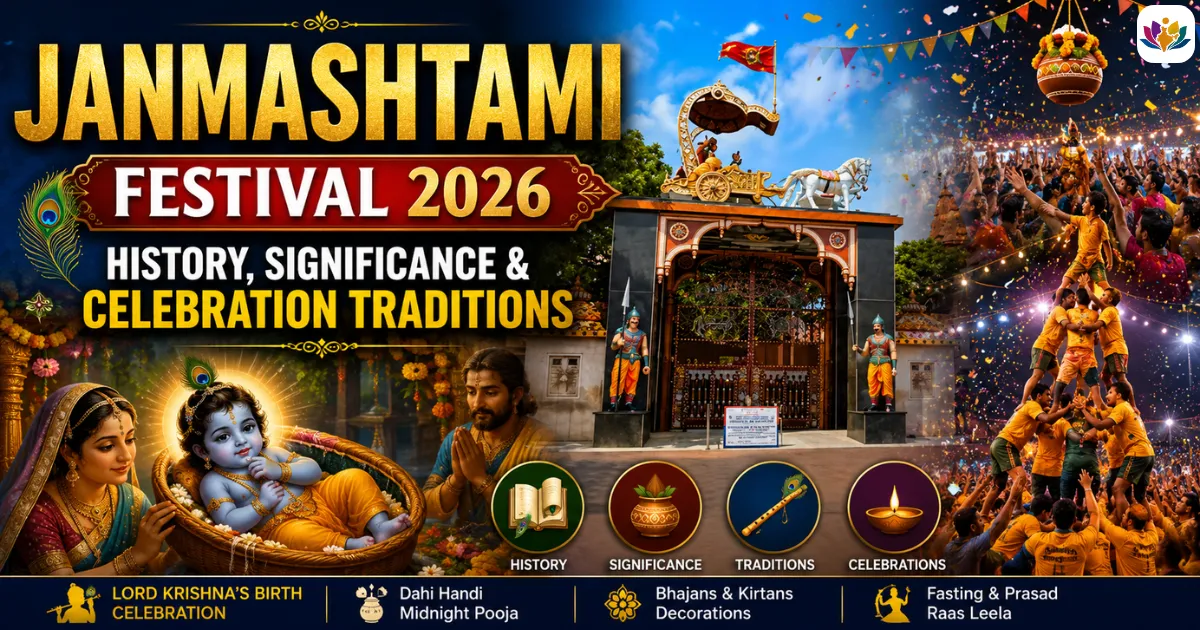
Janmashtami celebrates the birth of Lord Krishna, the eighth avatar of Lord Vishnu, who appeared on earth more than 5,000 years ago in Mathura-in the prison cell of King Kansa.
The story behind the festival is one of the most dramatic in all of Hindu scripture. Kansa, the king of Mathura and brother of Devaki, had received a prophecy that the eighth child of his sister would cause his death. He imprisoned Devaki and her husband Vasudeva and killed each child as they were born. When Krishna-the eighth child-was born at midnight, divine intervention freed Vasudeva from his chains. Vasudeva carried the infant Krishna across the flooded Yamuna River to Gokul, where he was placed in the care of Yashoda and Nanda. Krishna grew up in Vrindavan before eventually returning to Mathura to defeat Kansa and fulfil the prophecy.
Janmashtami marks this exact midnight-the moment when the prison cell of Mathura filled with light instead of darkness and the eighth child Kansa had tried to prevent was born. That is why the Nishita Kaal midnight puja, performed at 11:26 PM to 12:11 AM, is considered the sacred heart of the entire festival. Everything else-the fasting, the decorations, the bhajans-builds toward and away from this single 45-minute window.
Significance of Janmashtami in Hindu Tradition
Janmashtami is not just a birthday celebration. Its depth in Hindu tradition comes from what Krishna’s birth and life represent-and what the festival asks of the devotee.
- Dharma restored through divine intervention: Krishna was born specifically to end Kansa’s tyranny and restore righteousness. The festival celebrates the principle that dharma, however suppressed, will ultimately prevail.
- The Bhagavad Gita connection: Krishna’s life led to the Mahabharata and the Bhagavad Gita-the most widely read spiritual text in the world. Janmashtami is the origin point of that entire teaching tradition.
- The complete avatar: Krishna has considered the Purna Avatara-the most complete divine incarnation-in Vaishnava theology. His life encompasses the roles of infant, child, youth, warrior, teacher and king simultaneously.
- Fasting as spiritual discipline: Devotees fast for the entire day before breaking the fast at midnight after the birth ceremony-a practice that connects the physical act of hunger with the spiritual anticipation of divine birth.
- Unity across sampradayas: Unlike some festivals that divide along denominational lines, Janmashtami draws Vaishnava, Smarta and non-sectarian Hindus together into shared celebration, with the only difference being which of the two days they observe.
Why Mathura and Vrindavan Are the Heart of Janmashtami
Every city in India celebrates Janmashtami. But the experience in Mathura and Vrindavan is categorically different from anywhere else-not just in scale, but in meaning.
Mathura is where Krishna was actually born. The Shri Krishna Janmabhoomi Temple in Mathura is built around the exact prison cell where the birth took place. The midnight abhishek (ritual bath) and Janmotsav performed here, at the very location the scriptures describe, is not a re-enactment-it is a celebration at the source. Pilgrims who experience this consistently describe it as the most spiritually charged place they have ever stood.
Vrindavan is where Krishna grew up, played and performed his leelas. Every temple in Vrindavan is directly connected to a specific episode of his life-Banke Bihari, where Swami Haridas first encountered the deity through bhajan; Nidhivan, where the Raas Leela took place; ISKCON, which holds one of the largest midnight abhishek celebrations in India. On Janmashtami, the atmosphere across both cities is unlike any other night of the year.
Experience My India’s Janmashtami packages are built around experiencing both cities across the two-day celebration period-4 September at Janmabhoomi in Mathura for the midnight Nishita Kaal and 5 September at ISKCON Vrindavan for the Vaishnava Janmotsav. Book Our Mathura Vrindavan Tour Packages or Call +91-7302265809 to discuss the right itinerary for your group.
How Janmashtami Is Celebrated-Rituals and Traditions
| Ritual / Tradition | When It Happens | What It Involves |
| Fasting (Janmashtami Vrat) | All day on 4 September | Devotees abstain from grains and regular salt; fruits, milk, curd, sabudana and nuts are permitted |
| Temple decoration and jhankis | Several days before | Elaborate scenes from Krishna’s life (jhankis) and cradles (jhulan) installed across all major temples |
| Rasleela performances | Days preceding and on 4 September | Traditional dance-dramas depicting Krishna’s leelas, performed by local groups; most elaborate in Vrindavan |
| Abhishek of Bal Gopal | Precisely at midnight-11:26 PM to 12:11 AM | Ritual bath of the infant Krishna idol with milk, curd, ghee, honey and sacred water; the most sacred moment of the festival |
| Midnight Janmotsav | 11:26 PM – 12:11 AM (4–5 Sept) | Birth ceremony-conch shells, bells, bhajans, cradle ceremony, Chhappan Bhog offering |
| Parana (breaking the fast) | After 11:23 AM on 5 September | Devotees break their day-long fast once the Ashtami Tithi ends |
| Dahi Handi | 5 September 2026 | Human pyramid teams attempt to break a pot of curd hung high above-re-enacting Krishna’s childhood mischief |
| Nandotsav | 5 September 2026 | Celebration of Nanda Maharaj’s joy at Krishna’s birth-marked in Vrindavan and Nandgaon, 50 km away |
The most locally distinctive tradition in Mathura is the Ghatas-a month-long practice where every major temple adopts a colour theme and dresses the Krishna idol accordingly, changing it daily for the entire Bhadrapada month leading up to Janmashtami. It is something most pilgrims from outside Braj have never heard of and it makes Mathura’s preparation for Janmashtami unlike any other city in India.
ISKCON Janmashtami 2026-Why the Date Is Different
This is one of the most searched questions before every Janmashtami and the answer is actually straightforward once you understand it.
Hindu festivals are calculated using the Panchang, the traditional lunar calendar. For Janmashtami, there are two valid traditions for picking the correct day. The Smarta tradition (followed by most household devotees and the major Mathura temples including Janmabhoomi) observes Janmashtami on the day when Ashtami Tithi falls at midnight-which in 2026 is 4 September. The Vaishnava tradition (followed by ISKCON and most temple organisations across the world) prefers the day when the Ashtami Tithi coincides with Rohini Nakshatra at sunrise-which in 2026 falls on 5 September.
Neither date is incorrect. Both traditions have scriptural backing. The practical result for a pilgrim visiting Mathura and Vrindavan in 2026 is two consecutive nights of celebration-4 September at Janmabhoomi and the major Mathura temples and 5 September at ISKCON Vrindavan. Experience My India builds this 2-day Mathura Vrindavan Tour window into every Janmashtami tour package. Call +91-7302265809 to check availability-these packages book out weeks in advance.
Janmashtami Across India-A Regional Comparison
While Mathura and Vrindavan offer the most immersive experience, Janmashtami is celebrated distinctly across India. This table shows what makes each region’s celebration different.
| Region | Distinctive Tradition | Scale |
| Mathura, UP | Janmabhoomi midnight Janmotsav, Ghatas, Jhankis across all temples, Rasleela performances | 1.5 million pilgrims across 2 days |
| Vrindavan, UP | Banke Bihari’s once-a-year Mangala Aarti, ISKCON grand abhishek on 5 Sept, Nandotsav celebration | Part of the 1.5 million total for Braj |
| Mumbai / Pune | Dahi Handi competitions with cash prizes, human pyramid formations across the city | Tens of thousands of Govinda teams |
| Dwarka, Gujarat | Dwarkadhish Temple adorned with gold and diamonds, midnight darshan queue starts the previous evening | Lakhs of pilgrims |
| ISKCON temples (worldwide) | Standardised Vaishnava programme-abhishek, bhajans, Chhappan Bhog, feast for thousands | Hundreds of ISKCON centres globally |
| South India (Tamil Nadu, Kerala) | Rice flour footprints (Krishna’s padam) drawn from doorstep to puja room; Guruvayur: elephant processions | Temple-centred, less mass gathering |
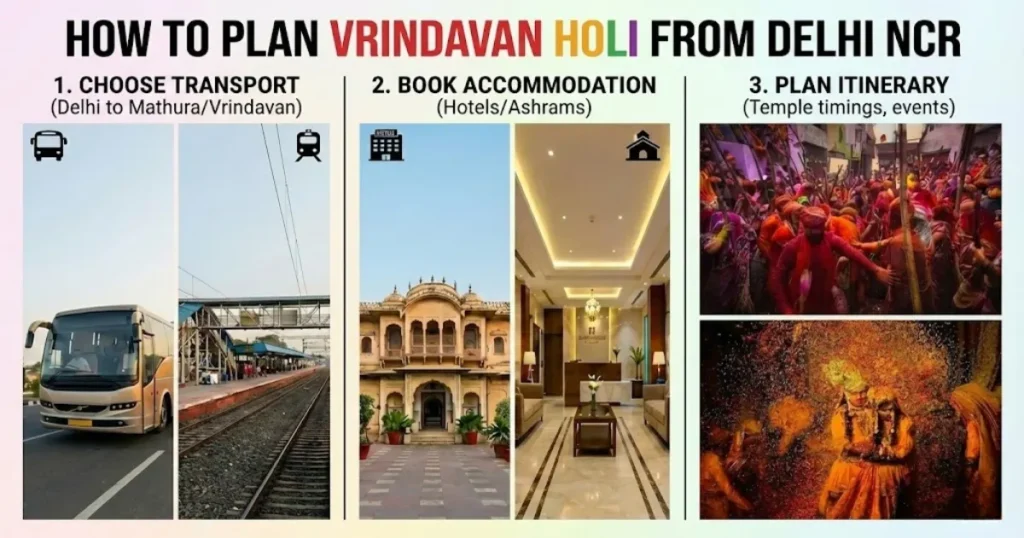
How to Reach Mathura Vrindavan for Janmashtami 2026
Janmashtami is the single most congested travel window for Mathura and Vrindavan. Normal approach routes are closed to private vehicles within 3 km of the temples from the evening of 4 September onward.
| Mode | Normal Distance / Time | Janmashtami Note |
| Road (Delhi via Yamuna Expressway) | 183 km / 3 hr 4 min | Depart Delhi before 12 noon on 4 September to beat expressway congestion. Road closures near temples from evening. |
| Train (Mathura Junction) | 141 km / 1.5–4 hrs | High demand-book 4–6 weeks ahead. Extra special trains added by Indian Railways. Still the most predictable option. |
| Bus | 133–180 km / 3–5 hrs | Buses reach Mathura bus stand, then auto/e-rickshaw to hotel. Last section on foot-no vehicles inside 3 km radius. |
| Experience My India AC Cab | Door-to-hotel transfer | Includes pre-planned hotel within the walking zone-no last-minute navigation through 1.5 million-person crowds. |
Experience My India pre-books hotels within the temple walking zone specifically for Janmashtami groups-the difference between a 5-minute walk to Janmabhoomi and a 90-minute struggle through vehicle-restricted roads. Call +91-7302265809 to confirm hotel availability for 3–5 September 2026.
Know Before You Plan
- Book hotel and tour package 4–6 weeks ahead. Janmashtami 2026 (4–5 September) is a Friday-Saturday-the most popular combination. Hotels within 1 km of the temple belt sell out by late July.
- The main gate at Shri Krishna Janmabhoomi closes to new entrants at 10:00 PM on Janmashtami night. If you want to be inside for the midnight birth ceremony, arrive at the temple before 9:30 PM.
- All private vehicles are banned within a 3 km radius of the temples from evening on 4 September. Your hotel must be inside this zone or you will face a 90-minute walk-in. Experience My India’s Janmashtami packages pre-book accordingly.
- Do not try to cover both Mathura and Vrindavan on the same night. The crowd movement between the two cities on Janmashtami night is simply not practical. Experience My India recommends Mathura on the 4th, Vrindavan on the 5th.
- Dress modestly-covering shoulders and knees. Yellow and blue are considered auspicious on Janmashtami, as they are associated with Lord Krishna.
- Carry only a small bag. Security checks at Janmabhoomi involve depositing electronics (no phones inside). A small cloth bag handles this better than a large backpack.
- The fast is broken after 11:23 AM on 5 September 2026 once the Ashtami Tithi ends. If you are observing the vrat, plan your return travel accordingly.
- Experience My India manages crowd navigation, hotel placement and entry timing for every Janmashtami tour group-call +91-7302265809 to book or for a free planning consultation.
Ground Truth-What Nobody Tells You About Janmashtami
After guiding Janmashtami groups since 2018, here are the five things that separate a genuinely meaningful Janmashtami experience from a frustrating one.
- The Janmabhoomi gate closing at 10 PM is the single most common Janmashtami planning mistake.
Most first-timers arrive at 11:30 PM for the midnight puja-and find the outer gate already closed. The 10 PM cutoff is strictly enforced due to crowd capacity limits. If midnight darshan at Janmabhoomi is your priority, you need to be inside before 9:30 PM and prepared to wait 2+ hours in a packed courtyard.
- 2. Approximately 1–1.5 million pilgrims enter Mathura and Vrindavan across Janmashtami and Nandotsav.
This is not a number that comes through in any travel guide. Street widths in old Vrindavan are under 4 metres. A crowd this size physically compresses movement to near-standstill in the inner temple lanes by 9 PM on 4 September. Plan your entry and exit routes before you leave the hotel.
- Banke Bihari’s once-a-year Mangala Aarti on Janmashtami is one of the most extraordinary darshan moments in Braj-and most pilgrims don’t know about it.
Banke Bihari Temple never holds a Mangala Aarti on any other day of the year. On Janmashtami, the temple opens for this unique dawn session. Pilgrims who know this wake up for it and describe it as one of the most memorable moments of the entire festival.
- The ISKCON celebration on 5 September is, for many pilgrims, actually the more personally meaningful experience.
The Janmabhoomi midnight ceremony is spiritually significant but takes place in extreme crowds. ISKCON’s 5 September programme-while still busy-has a more manageable, devotionally structured format with clear abhishek ceremony, kirtan and feast. Experience My India always recommends attending both, for different reasons.
- Nandotsav (5 September) in Nandgaon, 50 km from Vrindavan, is almost always left off Janmashtami itineraries.
Nandgaon is the village that raised Krishna and its Nandotsav celebration-marking Nanda Maharaj’s joy at Krishna’s birth-is one of the most authentic and uncrowded Janmashtami experiences in all of Braj. For pilgrims with a third day, Experience My India includes Nandgaon in its extended 3-day Janmashtami packages.
Related Tour Packages by Experience My India
All packages include an AC cab, a Braj-born guide, pre-booked hotel inside the temple walking zone and entry timing management for Janmashtami crowds. Rated 4.5★ by 204+ pilgrims.
Janmashtami 2026, 2-Day Mathura Vrindavan Tour Package From ₹4,999 per person
4 September at Janmabhoomi for the midnight Janmotsav + 5 September at ISKCON Vrindavan for the Vaishnava celebration. Hotel pre-booked inside the temple walking zone. Book 4–6 weeks ahead-this package fills early.
Janmashtami 2026, 3-Day Braj Circuit with Nandotsav From ₹7,999 per person
Extends the 2-day Janmashtami plan with Nandgaon Nandotsav and Barsana on Day 3. For pilgrims who want the complete 2026 Janmashtami experience across the full inner Braj circuit.
Same Day Mathura Vrindavan Tour From ₹2,999 per person
For visitors not attending Janmashtami night specifically but wanting a day visit to Mathura and Vrindavan-available on non-festival dates throughout the year.
2-Day Mathura Vrindavan Tour Package From ₹4,999 per person
The standard 2-day guided circuit-covers all major temples, ISKCON Mangala Aarti, Nidhivan and the Prem Mandir light show. Available year-round outside festival dates.
📞 Book any package: Call or WhatsApp +91-7302265809
Frequently Asked Questions
When is Janmashtami Festival 2026?
Krishna Janmashtami 2026 falls on Friday, 4 September 2026. ISKCON and Vaishnava temples observe Janmashtami on Saturday, 5 September 2026. The Nandotsav and Dahi Handi celebrations also take place on 5 September. The most auspicious midnight puja window-the Nishita Kaal-runs from 11:26 PM to 12:11 AM on the night of 4–5 September. Experience My India runs Janmashtami tour packages covering both days from ₹4,999.
What is the Janmashtami 2026 midnight puja timing?
The Nishita Kaal-the sacred midnight window believed to mark Krishna’s exact birth time-runs from 11:26 PM to 12:11 AM on the night of 4–5 September 2026. This 45-minute period is when the main abhishek (ritual bath) of Bal Gopal and the birth ceremony take place at Shri Krishna Janmabhoomi and major temples in Mathura. Experience My India times Janmashtami tour arrivals around this specific window.
Why does ISKCON celebrate Janmashtami on 5 September 2026?
ISKCON follows the Vaishnava Sampradaya tradition, which observes Janmashtami on the day when Ashtami Tithi coincides with Rohini Nakshatra at sunrise rather than at midnight. In 2026, this calculation places ISKCON’s celebration on 5 September. The Smarta tradition, followed by most major Mathura temples, celebrates on 4 September when Ashtami falls at midnight. Both are equally valid. Experience My India recommends attending both for the full Janmashtami experience.
Can I attend Janmashtami in Mathura Vrindavan 2026?
Yes, completely. Mathura and Vrindavan are open to all pilgrims during Janmashtami. The practical requirement is advance planning-hotel inside the temple walking zone (3 km vehicle ban from evening of 4 September), arrival at Janmabhoomi before 9:30 PM if you want midnight darshan (gate closes at 10 PM) and separate days for Mathura (4 Sept) and Vrindavan (5 Sept). Experience My India handles all of this. Call +91-7302265809 to book.
How many days should I plan for Janmashtami in Mathura Vrindavan?
Minimum 2 days: 4 September for Janmabhoomi midnight Janmotsav, 5 September for ISKCON Vrindavan. Adding a 3rd day allows Nandotsav in Nandgaon (50 km) and a visit to Barsana. Experience My India’s 2-day Janmashtami package starts from ₹4,999 per person. The 3-day Braj Circuit package starts from ₹7,999. Call +91-7302265809 to check availability.
What is the Janmashtami fasting rule for 2026?
Devotees observing the Janmashtami Vrat fast from the morning of 4 September until after midnight. Permitted during the fast: fruits, milk, curd, sabudana (sago), nuts and sendha namak-based preparations. Not permitted: grains, regular salt, onion and garlic. The fast is broken after 11:23 AM on 5 September once the Ashtami Tithi ends. Spiritual practice during the fast includes bhajans, temple visits and the midnight birth ceremony.
What is Dahi Handi and when is it in 2026?
Dahi Handi is a Janmashtami tradition where groups (called Govinda teams) form human pyramids to break a clay pot filled with curd or butter hung above the street-re-enacting Krishna’s childhood habit of stealing butter. In 2026, Dahi Handi falls on Saturday, 5 September (the day after the main Janmashtami). It is most elaborate in Maharashtra, but also celebrated actively in Mathura and Vrindavan.
What is famous to buy in Vrindavan during Janmashtami?
Mathura Peda (milk sweet) is the essential Braj takeaway-available from Brijwasi Sweets and similar shops near the temples. Janmashtami-specific purchases include Krishna jhankis (clay figures depicting birth scenes), tulsi mala rosaries (₹50–₹500), Radha Krishna idols (₹100–₹5,000) and peacock feathers (₹10–₹50). Experience My India guides direct every group to specific trusted shops rather than touts outside temple gates.
What is Nandotsav and when does it happen in 2026?
Nandotsav celebrates the joy of Nanda Maharaj-Krishna’s foster father-on hearing the news of Krishna’s birth. It falls on 5 September 2026, the day after Janmashtami and has celebrated most authentically in Nandgaon, 50 km from Vrindavan and in Vrindavan itself. Experience My India’s 3-Day Braj Circuit Janmashtami package includes Nandgaon on Day 3-call +91-7302265809 for details.
How do I book a Janmashtami tour package for 2026?
Call or WhatsApp +91-7302265809 with your group size, travel dates and city of origin. Experience My India offers Janmashtami-specific packages from ₹4,999 per person for a 2-day Mathura Vrindavan tour. Hotels inside the walking zone, Janmabhoomi midnight timing management, ISKCON 5 September coverage and all transport are included. Book at least 4–6 weeks before 4 September-hotel availability inside the temple zone becomes very limited after mid-July.
Celebrate Janmashtami 2026 with Experience My India
Janmashtami Festival 2026 on 4 September is the most spiritually charged night in Braj-and the most logistically demanding. Two dates (4 and 5 September), two separate celebrations (Smarta and ISKCON), a 10 PM gate closure, a 3 km vehicle ban and 1.5 million fellow pilgrims. The experience is worth every bit of it when planned correctly.
Experience My India has guided pilgrims through this exact combination of Janmashtami nights since 2018. The local knowledge-which hotel zone, which entry time, which morning to visit ISKCON-is what turns a chaotic crowd experience into a genuinely sacred one.
Janmashtami tour packages start from ₹4,999 per person. Rated 4.5★ by 204+ pilgrims.
|
Book Your Mathura – Vrindavan Trip Today We Reply in 30 Minutes 📞 +91-7302265809 💬 WhatsApp: +91-7302265809 Packages start from ₹1,999/ person | Rated 4.5★ / 204+ Reviews Explore all: Mathura Vrindavan Tour Packages Jai Shri Krishna 🙏 |