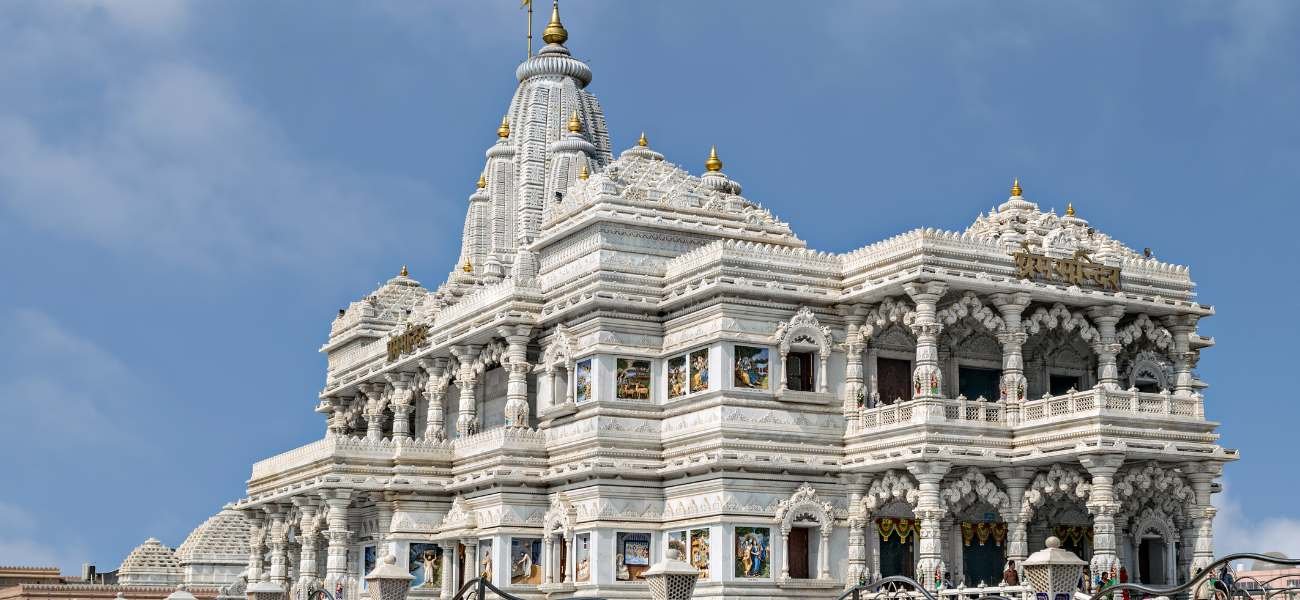





The Vrindavan temple dress code is not a mere set of rules printed on a noticeboard; it is, in truth, an old thread of courtesy that ties the pilgrim to the sanctity of the shrine. In these narrow lanes, where every brick seems to hum with a Krishna kirtan and every breeze carries the faint fragrance of incense, what you wear is not just clothing — it is a quiet introduction of your intent. The devotee here does not enter as a passer-by; he enters as a guest in the Lord’s own courtyard, and the attire he chooses speaks before he does.
Once, there was no discussion on the matter at all. Men came in dhoti-kurta, women in saree or salwar-kameez, the head respectfully covered with a pallu or dupatta. Today, though the times have quickened, Vrindavan still breathes at the pace of devotion. Here, fabric is not chosen for fashion, but for the respect it conveys.
Table of Contents
ToggleWhy the Vrindavan Temple Dress Code Holds Meaning
To stand at the steps of Banke Bihari Mandir at dawn, or by the marble floors of ISKCON as the conch sounds, is to notice that modesty is part of the rhythm here. It is stitched into the chants, woven into the folds of the garments, and felt in the way one walks towards the sanctum.
-
It preserves the purity of the sacred space.
-
It honours customs kept alive for centuries.
-
It fosters a shared identity among worshippers.
-
It quietens the mind, making space for prayer.
The guides of Vrindavan Mathura Tour Package often remark that those who come in harmony with this rhythm — in dress as well as in manner — find Vrindavan warmer, its people more open, and the darshan more unhurried.
What to Wear in Vrindavan Temples
The answer to what to wear in Vrindavan temples is not dictated by enforcement, but by the gentle persuasion of tradition.
For Men:
-
Dhoti-kurta or a simple kurta with cotton trousers.
-
Light, breathable fabrics in calm, earthy shades.
-
An angavastram or scarf for the shoulders in sanctum areas.
For Women:
-
Saree or salwar-kameez with a dupatta.
-
Soft cotton or silk, free of excessive glitter.
-
A light head-covering during prayer.
Modern outfits like jeans or t-shirts will not earn you a reprimand, but they will keep you apart from the visual harmony that tradition creates here. And in Vrindavan, blending in is not about hiding — it is about belonging.
The Grace of Traditional Attire for Vrindavan Temple Visit
Choosing traditional attire for Vrindavan temple visit is like carrying a small piece of history on your shoulders. It is comfort shaped by climate, elegance shaped by humility.
-
It is suited to the heat and movement of temple parikramas.
-
It reflects the colours and lines of temple architecture.
-
It transforms you from a spectator into a participant.
When the morning sun strikes the Yamuna ghats, and you are in attire that has been worn here for generations, you are not simply walking into a temple — you are stepping into a centuries-old conversation between the devotee and the divine.
From the Words of Those Who Know
Ask the pandit at Radha Raman Mandir or the elderly vendor outside Loi Bazaar, and they will tell you that attire is not vanity, it is announcement. A covered head, a plain fabric, an unhurried gait — these are signals of why you have come.
Even those who live in Vrindavan, wearing everyday modern clothes, often keep a set of temple garments aside — for here, the moment you step inside the mandir gates, you are stepping into another world.
For First-Time Visitors
Travelling with Vrindavan Mathura Tour Package makes it easier to understand and follow the Vrindavan temple dress code.
Remember:
-
Carry a scarf or dupatta; it will serve more than one purpose.
-
Avoid sleeveless, tight, or short outfits.
-
Keep footwear light and easy to remove.
-
Choose airy cottons in summer, warm shawls in winter.
The Spirit Behind the Cloth
At heart, the Vrindavan temple dress code is not about what you cannot wear — it is about what wearing the right thing allows you to feel. It is like the quiet moment before aarti, when the lamps are lit and the air holds its breath — the attire you choose becomes part of that silence, part of that offering.
Bullet Points – Essentials to Remember
-
Modest clothing keeps the focus on prayer.
-
Men: dhoti-kurta or kurta-pyjama; women: saree or salwar-kameez with dupatta.
-
Cover the head in sanctum areas.
-
Avoid flashy, tight, or revealing outfits.
-
Keep a scarf or shawl handy.
FAQs on Vrindavan Temple Dress Code
1. Is the Vrindavan temple dress code enforced in all temples?
No, but most expect modest dress as a courtesy to tradition.
2. Can women wear jeans inside the temple?
They can, but saree or salwar-kameez with dupatta is more in tune with the setting.
3. What to wear in Vrindavan temples during summer?
Light cottons with a head covering are best for the heat.
4. Do men need to cover their head?
In some temples, yes. A small cloth or scarf works well.
5. Does traditional attire for Vrindavan temple visit hold special meaning?
It signals humility, continuity of culture, and a readiness for true darshan.