



| Quick answer- Govind Dev Ji Temple in Vrindavan is a grand red sandstone temple built in 1590 by Raja Man Singh I of Amber, under the guidance of Rupa Goswami, to house a deity of Krishna recovered in Vrindavan. Originally seven storeys, its upper floors were demolished under Aurangzeb around 1670, and the original deity was carried to safety in Jaipur, where it remains today. A pratibhu, a proxy deity, is worshipped in the Vrindavan temple now. It is one of the great works of 16th century architecture in North India, blending Hindu, Mughal and European styles. Entry is free. Experience My India has guided 50,000 plus pilgrims since 2018, rated 4.5 stars. WhatsApp +91-7302265809. |
Introduction
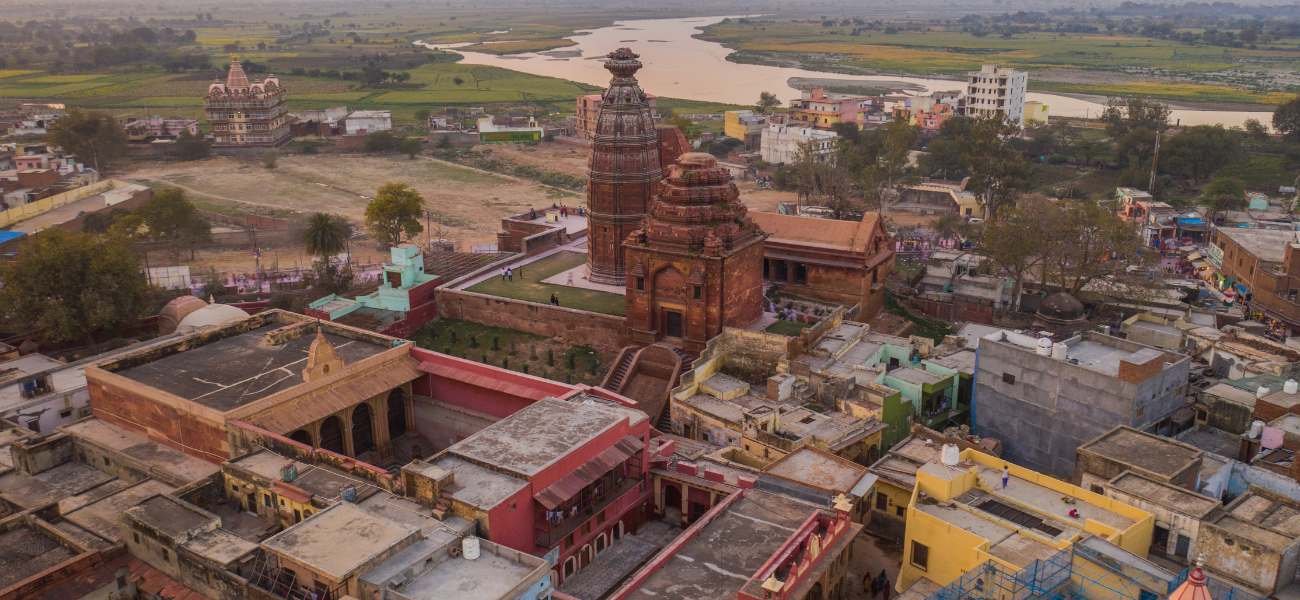
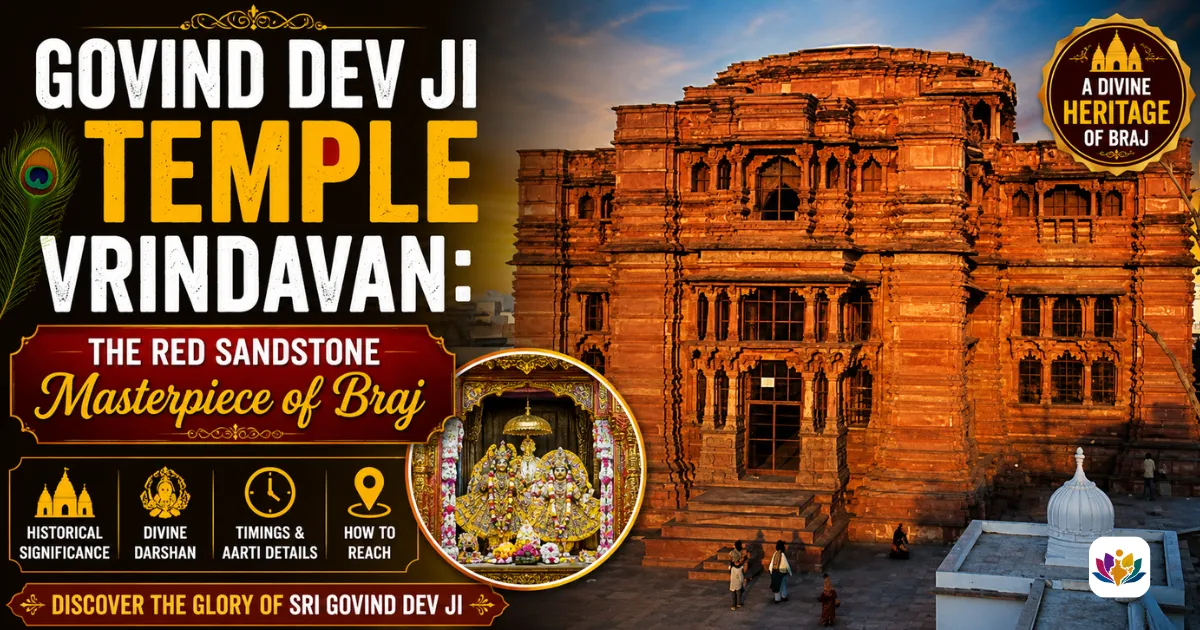
Most temples in Vrindavan are places of darshan first and architecture second. Govind Dev Ji is the opposite. You come here and, before you have thought about the deity at all, you stop and look up, because you are standing inside one of the most extraordinary buildings in North India, a red sandstone temple that was once seven storeys tall and is still, even broken, breathtaking.
It is a temple with a wound in its history, and that wound is part of what makes it worth seeing.
I am Gurudutt. I was born in Braj Bhoomi and I have brought pilgrims and lovers of history to this temple since 2018. This guide clears up the Jaipur confusion first, then tells you the full story: who built it, how the deity was found, why the upper floors are gone, why the original deity now lives in Jaipur, and what you actually see when you visit today.
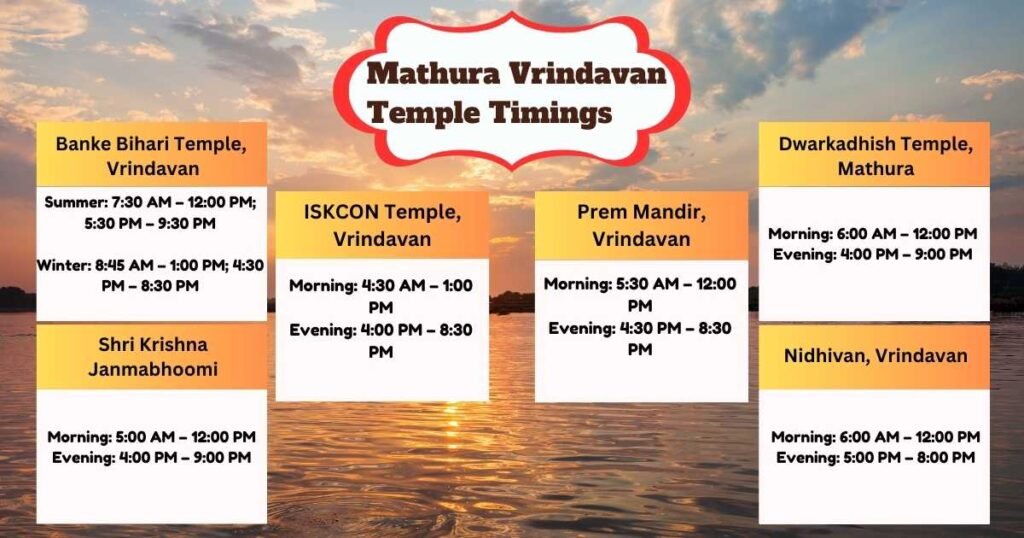
For the other temples of the town, our Vrindavan temple timings guide has them all, and the wider list is in our places to visit in Mathura and Vrindavan guide.
Jaipur or Vrindavan, Which Govind Dev Ji
Let me clear up the single most common confusion first, because it sends people to the wrong city.
There are two famous Govind Dev Ji temples, and they are deeply connected.
| Vrindavan | Jaipur | |
| What it is | The original temple, built 1590 | The temple where the deity now lives |
| The building | The grand red sandstone monument | Part of the Jaipur City Palace complex |
| The deity | A pratibhu, a proxy deity, worshipped today | The original Govind Dev deity, since the 18th century |
| Why visit | History, architecture, the original site | Living daily worship of the original deity |
Here is the short version. The temple was built in Vrindavan in 1590. About 80 years later, to protect the deity from Aurangzeb’s armies, it was carried away and eventually enshrined in Jaipur, where it became one of that city’s most revered deities and remains to this day. So the magnificent original temple stands in Vrindavan, but the original deity is in Jaipur, with a proxy served in Vrindavan.
If you are in Braj, the Vrindavan temple is the one this guide is about, and it is unmissable. If you are travelling from Rajasthan, our Jaipur to Vrindavan guide covers the journey between the two.
The History, Built in 1590
Govind Dev Ji Temple was built in 1590 by Raja Man Singh I of Amber, one of the greatest Rajput generals in the court of the Mughal Emperor Akbar.
Man Singh was a devout Vaishnav, and he built the temple under the spiritual guidance of the Goswamis of Vrindavan, particularly Rupa Goswami, one of the six Goswamis sent to Vrindavan by Chaitanya Mahaprabhu to recover the lost holy sites of Krishna’s life. The temple was a colossal undertaking. It reportedly cost around ten million rupees, an enormous sum then, and took several thousand workers about five years to complete.
Remarkably, the temple was built with the cooperation of the Mughal court. The late 16th century under Akbar was a period of relative religious tolerance, and Emperor Akbar himself is said to have donated the red sandstone for the construction, the same stone quarried for his own imperial buildings. It was one of the finest and tallest structures in all of North India, a Hindu temple rising in the heart of the Mughal empire.
How the Deity Was Found
The deity of Govind Dev has a story that reaches back thousands of years before the temple.
Tradition holds that the original deity was installed in Vrindavan by Vajranabha, the great-grandson of Krishna, thousands of years ago, and was later lost to time. When Rupa Goswami came to Vrindavan on the instruction of Chaitanya Mahaprabhu to recover the forgotten sacred sites, he searched for the lost deity.
The story tells that Rupa Goswami met a cowherd boy who guided him to a particular spot and then vanished. Realising the boy had been Krishna himself, Rupa Goswami had the ground excavated, and the ancient deity of Govind Dev was recovered. The finding of such a sacred deity called for a temple worthy of it, and it was this that inspired Raja Man Singh to build the magnificent structure of 1590.
The deity is worshipped as Govind, a name of Krishna the cowherd, with Radha at his side, in the Gaudiya tradition of Chaitanya Mahaprabhu.
Aurangzeb and the Broken Storeys
The temple you see today is missing most of its original height, and the reason is a specific and well recorded historical event.
The original structure was seven storeys tall. Around 1670, during the reign of the Mughal Emperor Aurangzeb, whose religious policy was the opposite of Akbar’s tolerance, the temple was attacked and its upper storeys were demolished, leaving the lower part that survives today, generally described as three storeys.
There is a much loved legend about the attack. As Aurangzeb’s soldiers began to bring the temple down, the ground is said to have shaken so violently that the terrified soldiers fled and did not return, which is why any of the temple survived at all. Whether you take the legend or the plain history, the outcome is the same. A seven storey masterpiece was reduced to the still imposing structure that stands now.
I tell this as recorded history, without bitterness. Construction, destruction and survival, all layered into one building. That is part of what makes standing inside it so moving.
Why the Deity Is Now in Jaipur
This is the part that connects the two temples, and it is a genuine tale of rescue.
When it became clear that Aurangzeb’s forces would attack, the priority was to save the deity itself, not the building, which could not be moved. The original Govind Dev deity was secretly carried out of Vrindavan and taken to safety. After a long journey, it was eventually enshrined in Jaipur by Raja Sawai Jai Singh II, the founder of the city, in the early 18th century, within the City Palace complex.
There, the original deity remains to this day, worshipped by thousands, and Govind Dev Ji is regarded as the presiding deity of Jaipur. In the Vrindavan temple, a pratibhu, a proxy deity, is worshipped in the original’s place. In the Gaudiya understanding, the proxy is worshipped as wholly the Lord, so the darshan in Vrindavan is complete and real, even though the ancient murti now resides in Rajasthan.
So the two temples are not rivals. They are two halves of one story, the original home and the deity’s place of refuge.
The Architecture, a Masterpiece of Three Styles
Even reduced to a fraction of its height, Govind Dev Ji is an architectural marvel, and for many visitors the building is the real reason to come.
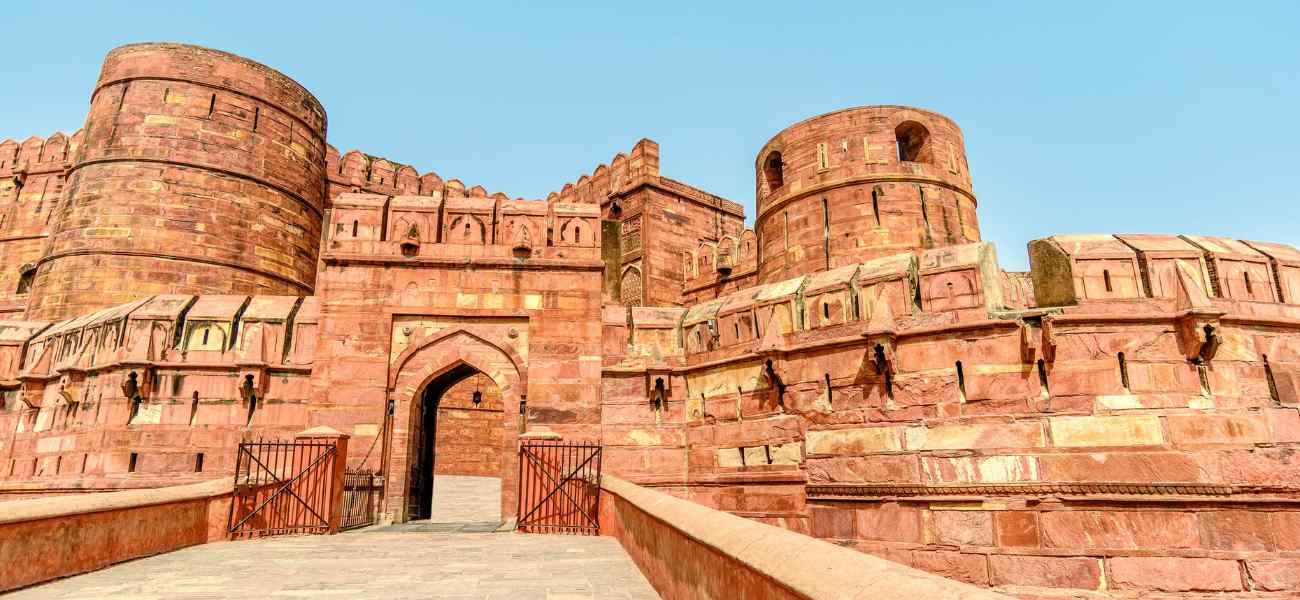
It is built entirely of red sandstone, and it blends three architectural traditions in one structure: Hindu, Mughal and European elements, a rare and remarkable combination that reflects the cross-cultural moment in which it was built. The temple is laid out in the shape of a cross, unusual for a Hindu temple, with a high vaulted ceiling supported by great pillars.
The single most admired feature is the ceiling of the main hall, carved with an enormous lotus flower sculpture said to weigh several tons, a masterpiece of stone carving. The high arched ceilings, the pillared halls, and the sheer scale of the sandstone give the interior the feeling of a great cathedral more than a typical temple, which is exactly why lovers of architecture single it out among all the temples of Braj.
What You See Today
Today the temple has two parts, and it helps to know this before you arrive.
There is the original historic structure, the great red sandstone monument, which is protected as a monument of national importance and is the architectural marvel you come to see. And there is a newer temple behind it, where the proxy deity of Govind Dev is worshipped with Radha in daily seva.
So a visit here is two experiences in one: standing inside a 400 year old architectural masterpiece with a dramatic history, and having darshan of Govind Dev in the active temple. For a visitor who loves history and Hindu-Mughal architecture as much as darshan, this is the single most rewarding temple in Vrindavan.
Timings and Darshan
| Detail | |
| General pattern | Morning and evening darshan sessions, like most Vrindavan temples |
| Midday | Closed through the middle of the day, roughly noon to late afternoon |
| Entry | Free |
| Best time | Early morning, quieter and more personal |
Govind Dev Ji keeps the usual Vrindavan rhythm of a morning session and an evening session with a midday closure, and it tends to keep long hours within those. Because the exact clock times shift with the season and the temple calendar, confirm the day’s darshan timings before you go rather than relying on any single figure online. Our Vrindavan temple timings guide sets the pattern for the town, and my team confirms the day’s times before every tour. Call +91-7302265809.
Early morning is the best time to visit. The light on the red sandstone is beautiful, the temple is quieter, and the darshan feels more personal before the day’s crowds build.
How to Reach Govind Dev Ji Temple
| From | Distance | Travel time |
| Vrindavan Railway Station | About 1 km | A few minutes |
| Banke Bihari Temple | About 1.5 km | 10 minutes |
| ISKCON Vrindavan | About 2.5 km | 12 minutes |
| Mathura Junction | About 12 km | 30 to 40 minutes |
Govind Dev Ji sits in the old part of Vrindavan, near the other historic Goswami temples and not far from Banke Bihari. As with much of old Vrindavan, the final approach is through lanes better suited to walking or an e-rickshaw than a car. From Mathura, the route is in our Mathura to Vrindavan distance guide, and it fits naturally into a walking circuit of the old town temples covered in our Vrindavan sightseeing guide.
One of the Seven Goswami Temples
Govind Dev Ji is not a standalone. It is one of the seven principal temples of Vrindavan, the group established by the Goswamis of the Gaudiya tradition, each housing one of the original deities recovered or served in that great era of Vrindavan’s rebuilding.
These seven, which include Radha Raman, Radha Damodar, Radha Vallabh and others alongside Govind Dev, together form the historic devotional heart of Vrindavan. Seeing several of them together gives you a far deeper sense of the town’s 16th century flowering than any one temple alone. Radha Raman, one of the seven, is only a short distance away and is covered in our places to visit guide.
Ground Truth, What Nobody Tells You
- The original deity is in Jaipur, not here. The magnificent temple is in Vrindavan, but the ancient deity was carried to Jaipur to escape Aurangzeb and remains there. A proxy is worshipped here, and in the tradition it is worshipped as fully the Lord.
- Come for the architecture as much as the darshan. This is the one temple in Vrindavan where the building itself is a headline attraction. Look up at the carved lotus ceiling.
- It was once seven storeys. What you see is the surviving lower part. Knowing the original scale changes how you look at it.
- Akbar helped build it, Aurangzeb broke it. Two Mughal emperors, two opposite policies, both written into one building. That layered history is the real story.
- Early morning is best. The red sandstone glows in the morning light and the temple is quiet. Later in the day it fills, especially in season.
- It sits among the seven Goswami temples. Do not see it alone. Radha Raman and the others nearby give a fuller picture of old Vrindavan.
Know Before You Go
- Govind Dev Ji Temple in Vrindavan was built in 1590 by Raja Man Singh, in red sandstone donated by Akbar.
- It was originally seven storeys. Aurangzeb’s forces demolished the upper floors around 1670.
- The original deity was carried to Jaipur for safety and remains there. A proxy is worshipped in Vrindavan.
- The building blends Hindu, Mughal and European styles, with a famous carved lotus ceiling.
- Entry is free. It keeps morning and evening sessions with a midday closure.
- Confirm the day’s exact timings before visiting, as they shift by season.
- Early morning is the most beautiful and peaceful time.
- It is one of the seven principal Goswami temples of Vrindavan.
- For the other temples, see our Vrindavan temple timings guide.
Tour Packages by Experience My India
Every Vrindavan tour can include Govind Dev Ji, and history lovers should ask us to give it proper time.
| Package | Price per person | Covers |
| Same Day Mathura Vrindavan Tour | From ₹1,999 | The main temples of both towns |
| 2 Days Mathura Vrindavan Tour | ₹3,999 | Unhurried, time for the historic temples |
| 3 Days Mathura Vrindavan Tour | ₹5,999 | Adds Govardhan and Barsana |
| 4 Days Mathura and Vrindavan Tour | ₹7,999 | Full circuit, senior friendly pacing |
Tell us you love history and we will give the old Goswami temples the time they deserve. WhatsApp +91-7302265809.
Related Guides
- Vrindavan Temple Timings 2026
- Places to Visit in Mathura and Vrindavan
- Vrindavan Sightseeing Guide
- Banke Bihari Temple Vrindavan
- Jaipur to Vrindavan Distance and Route
Frequently Asked Questions
Where is the Govind Dev Ji Temple, Jaipur or Vrindavan?
There are two connected temples. The original Govind Dev Ji Temple, the grand red sandstone monument built in 1590, is in Vrindavan. About 80 years later, the original deity was carried to safety from Aurangzeb’s armies and eventually enshrined in Jaipur, where it remains as one of that city’s most revered deities. So the original temple is in Vrindavan, while the original deity is in Jaipur, with a proxy worshipped in Vrindavan. Experience My India covers the Vrindavan temple. Call +91-7302265809.
Who built the Govind Dev Ji Temple in Vrindavan?
Govind Dev Ji Temple was built in 1590 by Raja Man Singh I of Amber, a leading Rajput general in the court of Emperor Akbar, under the spiritual guidance of Rupa Goswami of the Gaudiya tradition. It reportedly cost around ten million rupees and took several thousand workers about five years to build. Emperor Akbar is said to have donated the red sandstone. Experience My India guides tell the full story on site. Call +91-7302265809.
Why is the Govind Dev Ji deity in Jaipur?
When Emperor Aurangzeb’s forces threatened Vrindavan around 1670, the original Govind Dev deity was secretly carried out to protect it, since the temple building could not be moved. After a long journey it was enshrined in Jaipur by Raja Sawai Jai Singh II, the founder of the city, and it remains there as the presiding deity of Jaipur. A pratibhu, or proxy deity, is worshipped in the Vrindavan temple, regarded in the tradition as fully the Lord.
Why is the Govind Dev Ji Temple only partly standing?
The temple was originally seven storeys tall, one of the tallest structures in North India. Around 1670, during the reign of Emperor Aurangzeb, whose policy was far less tolerant than Akbar’s, the temple was attacked and its upper storeys demolished, leaving the surviving lower structure of about three storeys seen today. Legend says the ground shook so violently during the attack that Aurangzeb’s soldiers fled. Experience My India explains the history on tour. Call +91-7302265809.
What is special about the Govind Dev Ji Temple architecture?
It is built entirely of red sandstone and blends Hindu, Mughal and European architectural styles, a rare combination reflecting the cross-cultural moment of its 1590 construction. Laid out in the shape of a cross with high vaulted ceilings and great pillars, its most admired feature is the enormous carved lotus flower on the ceiling of the main hall, said to weigh several tons. Even reduced from its original height, it is one of North India’s architectural masterpieces.
Who is the deity at Govind Dev Ji Temple?
The deity is Govind, a name of Krishna as the cowherd, worshipped with Radha at his side in the Gaudiya tradition of Chaitanya Mahaprabhu. Tradition holds the original deity was installed in Vrindavan thousands of years ago by Vajranabha, the great-grandson of Krishna, later lost, and recovered by Rupa Goswami. The original is now in Jaipur, and a proxy deity is worshipped in the Vrindavan temple today. Experience My India covers the full story. Call +91-7302265809.
What are the Govind Dev Ji Temple Vrindavan timings?
The temple follows the usual Vrindavan pattern of a morning session and an evening session with a closure through the middle of the day, and it tends to keep long hours. Because exact times shift by season and temple calendar, confirm the day’s darshan timings before visiting rather than relying on a single figure online. Entry is free, and early morning is the most peaceful time. Experience My India confirms the day’s times before every tour. Call +91-7302265809.
How do I reach Govind Dev Ji Temple in Vrindavan?
Govind Dev Ji Temple is in old Vrindavan, about 1 km from Vrindavan Railway Station, 1.5 km from Banke Bihari Temple, and 12 km from Mathura Junction, roughly 30 to 40 minutes by road. As with much of the old town, the final approach is best on foot or by e-rickshaw rather than car. It fits naturally into a walking circuit of the historic temples. Experience My India arranges transport and guiding. Call +91-7302265809.
Is Govind Dev Ji Temple worth visiting?
Yes, especially if you value history and architecture alongside darshan. It is the one temple in Vrindavan where the building itself is a headline attraction, a 400 year old red sandstone masterpiece with a dramatic history of construction under Akbar and partial destruction under Aurangzeb. You can admire the historic monument and have darshan of Govind Dev with Radha in the active temple behind it. Experience My India gives it proper time on request. Call +91-7302265809.
What are the seven principal temples of Vrindavan?
Govind Dev Ji is one of the seven principal temples of Vrindavan established by the Goswamis of the Gaudiya tradition, which together form the historic devotional heart of the town. They include Govind Dev, Radha Raman, Radha Damodar, Radha Vallabh and others, each housing a deity recovered or served in Vrindavan’s great 16th century revival. Seeing several together gives the fullest sense of old Vrindavan. Experience My India can plan a historic temples circuit. Call +91-7302265809.
Can I visit both the Vrindavan and Jaipur Govind Dev Ji temples?
Yes, and many pilgrims on the Golden Triangle circuit do exactly that, seeing the original temple in Vrindavan and the original deity in Jaipur. Jaipur is about 235 to 250 km from Vrindavan, roughly 4 to 5 hours by road via Mathura. Experience My India can plan a combined Braj and Jaipur itinerary. See our Jaipur to Vrindavan guide for the route. Call +91-7302265809.
Conclusion
Govind Dev Ji is the temple where you come for the building as much as for the darshan. Stand inside the red sandstone hall, look up at the great carved lotus, and hold in your mind that this was once seven storeys, that Akbar gave the stone and Aurangzeb took the height, and that the deity it was built for now lives in Jaipur while a proxy receives your prayers here.
Few buildings anywhere carry so much history in their walls. Come in the early morning, when the sandstone glows and the temple is quiet, and give it more time than you think you need.
Since 2018, Experience My India has brought more than 50,000 pilgrims through Vrindavan’s temples, and we are rated 4.5 stars by the families who trusted us. Tell us you love history, and we will make sure Govind Dev Ji and the old Goswami temples get the time they deserve.
|
Book Your Mathura – Vrindavan Trip Today We Reply in 30 Minutes 📞 +91-7302265809 💬 WhatsApp: +91-7302265809 Packages start from ₹1,999/ person | Rated 4.5★ / 204+ Reviews Explore all: Vrindavan Mathura Tour Packages Jai Shri Krishna 🙏 |